
The evolution of Apple’s "Pro" silicon represents a masterclass in shifting from raw clock speeds to AI-driven efficiency. When we analyze the trajectory from the iPhone 12 Pro to the iPhone 14 Pro, the primary narrative isn't just about megapixels or battery size; it is about the maturation of the Neural Engine and how software automation handles complex computational tasks in real-time.
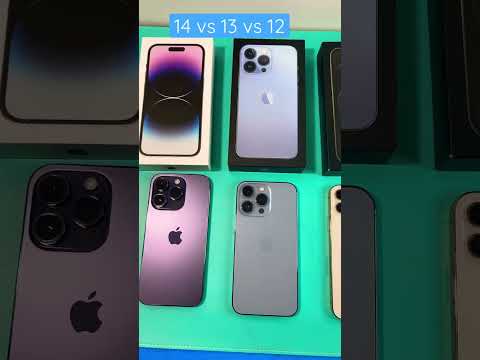
The Architectural Shift: A14 to A16 Bionic

The iPhone 12 Pro, powered by the A14 Bionic, established the baseline for modern mobile AI with its 16-core Neural Engine capable of 11 trillion operations per second (TOPS). This was the era where Deep Fusion and Smart HDR 3 began offloading image reconstruction to machine learning models rather than traditional ISP pipelines. However, the transition to the iPhone 13 Pro and the A15 Bionic saw a significant jump to 15.8 TOPS, introducing Cinematic Mode. This feature is a pinnacle of real-time AI automation, where the device predicts focus shifts based on human eye tracking and facial orientation without manual user input.
The iPhone 14 Pro further refined this with the A16 Bionic, the first chip built on the 4nm process. This iteration prioritized efficiency-per-watt, allowing the Photonic Engine to apply computational enhancements earlier in the imaging process on uncompressed pixels. This results in a massive leap in low-light performance by utilizing AI to preserve dynamic range that would otherwise be lost to noise.
Software Automation and UI Intelligence

One of the most overlooked aspects of the Pro line is how iOS uses AI to manage hardware resources. The ProMotion technology (introduced in the 13 Pro) is an automated system that scales refresh rates from 10Hz to 120Hz based on touch latency and on-screen content. With the iPhone 14 Pro, this automation reached its zenith with the Always-On Display, which drops to 1Hz to maximize power efficiency. Furthermore, the Dynamic Island serves as a hardware-software bridge, using real-time animation scaling to automate background task notifications (Live Activities), reducing the cognitive load on the user.
AI Implementation Score
To quantify the technological progression for enterprise and automation workflows, we have graded these devices across four key AI metrics:
| Feature Category | iPhone 12 Pro | iPhone 13 Pro | iPhone 14 Pro |
|---|---|---|---|
| NPU Throughput (TOPS) | 11.0 | 15.8 | 17.0 |
| Computational Photography | High | Very High | Elite (Photonic Engine) |
| Background Task Automation | Standard | ProMotion Optimized | Dynamic Island/AOD |
| Energy Efficiency Index | 7.5/10 | 8.8/10 | 9.5/10 |
Final Technical Verdict
For users prioritizing automated workflows and AI-enhanced productivity, the jump from the 12 Pro to the 14 Pro is substantial. While the 12 Pro remains a capable device for basic ML tasks, the 14 Pro’s ability to handle 48MP ProRAW processing via the Photonic Engine demonstrates a superior synergy between hardware and Smart AI logic. The 13 Pro remains the "efficiency sweet spot," but the 14 Pro is the definitive choice for those seeking maximum software-driven automation in a mobile form factor.
