
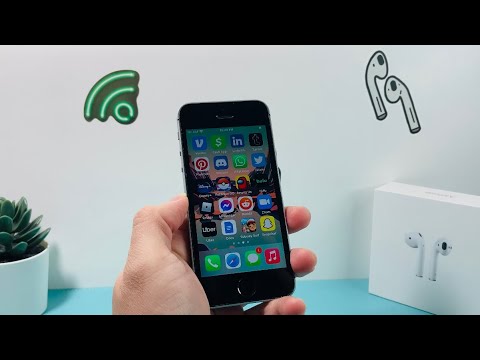
The iPhone SE (1st Generation), launched in March 2016, represents a legacy era of Apple hardware architecture. As we navigate the technical landscape of 2023, the device is now seven years old, operating on the A9 chip with 2GB of LPDDR4 RAM. From a senior systems perspective, evaluating this device requires looking beyond nostalgia and focusing on its ability to handle modern AI-driven applications, background automation, and current software stacks.
The A9 Architecture and AI Bottlenecks
The A9 chip was a milestone for its time, but it lacks the dedicated Neural Engine found in the A11 Bionic and later models. In 2023, most efficient mobile applications leverage on-device machine learning (Core ML) for tasks such as image recognition, text extraction, and predictive text. On the iPhone SE 1, these processes are offloaded to the CPU and GPU, leading to significant thermal throttling and rapid battery depletion. While the device can still run basic automation scripts via Apple Shortcuts, the execution latency for complex workflows is noticeably higher than modern silicon.
Software Support and API Integration
The iPhone SE 1st Gen is capped at iOS 15. While Apple continues to provide occasional security patches, the device is excluded from iOS 16 and the current iOS 17. For users focused on software efficiency, this is a critical failure point. Many modern APIs that facilitate seamless AI integration and advanced background processing are simply unavailable. Furthermore, as developers shift their minimum deployment targets to iOS 16, the SE 1 is increasingly facing "app rot," where essential productivity and automation tools no longer receive updates or functional parity.
AI Implementation Score
To quantify the device's utility in a modern high-efficiency environment, we have rated its performance across key AI and automation metrics:
| Metric | Score (1-10) | Technical Reason |
|---|---|---|
| On-Device ML Processing | 2/10 | Lack of dedicated Neural Engine hardware. |
| Automation Responsiveness | 4/10 | Significant latency in multi-step Shortcut execution. |
| NLP & Voice Processing | 3/10 | Siri and dictation rely heavily on server-side processing due to local hardware limits. |
| Energy Efficiency (AI Tasks) | 2/10 | High CPU draw for tasks that NPUs handle with minimal power. |
Hardware Constraints in 2023

Beyond the silicon, the 4-inch Retina display and the 1624 mAh battery pose significant hurdles for the modern power user. High-fidelity automation dashboards are difficult to navigate on such a small canvas. More importantly, the battery chemistry of these older units—even when replaced—struggles to maintain the peak power delivery required by the A9 chip when processing modern JavaScript-heavy web apps or AI-enhanced photography algorithms.
Final Verdict
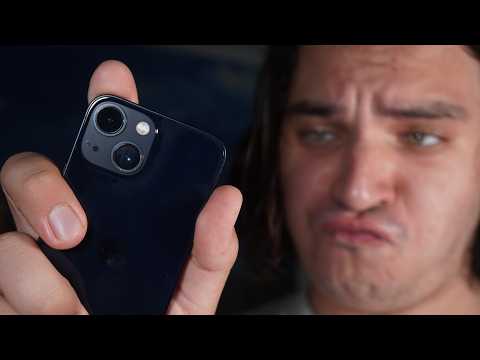
In 2023, the iPhone SE (1st Gen) is no longer a viable primary device for anyone requiring AI efficiency or robust automation. It serves better as a legacy testing node, a dedicated music player, or a secondary device for basic VoIP communication. For those prioritizing a compact form factor without sacrificing the capability to run modern intelligent software, the transition to at least the iPhone 13 Mini or the SE (3rd Gen) is technically mandatory.
