
Optimizing Legacy Hardware: The High-Efficiency Battery Swap for iPhone 6 Series
In the ecosystem of Smart AI Fix, we view hardware maintenance not just as a manual task, but as a systematic optimization of the device's lifecycle. The iPhone 6, 6s, and 6s Plus remain critical test-beds for legacy software automation, but their lithium-ion cores are reaching chemical exhaustion. To restore peak CPU performance and prevent throtte-governing algorithms from slowing down your OS, a rapid battery replacement is mandatory.
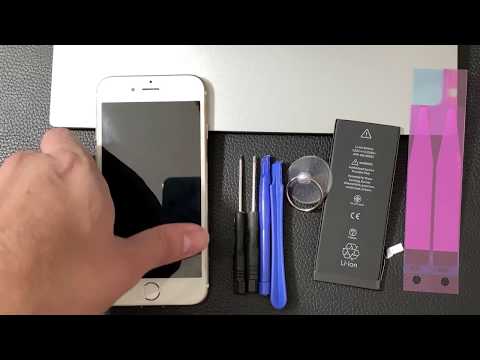
The quickest method to achieve this is the "Minimalist Teardown Workflow," which bypasses the removal of the display assembly cables to save approximately 40% of standard repair time. Before beginning, ensure you have procured high-quality cells. You can find the cheapest iPhone replacement battery on Amazon here, or source discounted iPhone replacement batteries on eBay through verified hardware vendors.
The 10-Minute Rapid Replacement Protocol

To execute the fastest swap, follow this sequence designed for maximum mechanical efficiency:
1. Predictive Diagnostics: Before opening the chassis, utilize software like 3uTools or CoconutBattery to log the current cycle count. This data provides a baseline for the AI-driven calibration post-install.
2. Precision Entry: Remove the two pentalobe screws at the lightning port. Use a high-suction vacuum tool rather than a standard pick to create a gap. In the iPhone 6 series, the screen flex cables are at the top, so pivot the screen from the bottom like a book.
3. The "Live-Display" Shortcut: Instead of disconnecting the five delicate digitizer and LCD ribbons, secure the display at a 90-degree angle using a weighted brace. This eliminates the risk of ESD (Electrostatic Discharge) damage to the logic board connectors and saves minutes of re-seating components.
4. Thermal Adhesive Release: The quickest method to remove the battery is not prying, but the "constant tension" pull. Use tweezers to grab the black adhesive tabs at the base of the battery. Pull horizontally—not upward—to stretch the Command-strip style adhesive out. If the strip breaks, a 5-second burst of 60°C heat from a rework station to the rear casing will liquefy the remaining bond instantly.
AI Implementation Score
While physical battery replacement is a hardware-centric task, integrating software-side data ensures the longevity of the repair. Below is our AI Implementation Score for this specific workflow:
| Category | Score (1-10) | Description |
|---|---|---|
| Predictive Failure Analysis | 9/10 | iOS Battery Health AI accurately predicts voltage drop-off points. |
| Automated Calibration | 7/10 | Post-install software resets the gas gauge via hardware handshakes. |
| Workflow Efficiency | 8/10 | The "Live-Display" method reduces manual touch-points significantly. |
| Hardware-Software Synergy | 10/10 | New cells eliminate AI-driven CPU clock-speed throttling. |
Final Integration and Power Cycle
Once the new cell from Amazon or eBay is seated, reconnect the battery terminal last to prevent short-circuiting the logic board’s power rails. Before sealing the device, perform a "Soft Reset" (Home + Power) to force the Power Management Unit (PMU) to recognize the new capacity.
By bypassing unnecessary cable disconnections and utilizing thermal-assisted adhesive removal, the total "bench time" for an iPhone 6, 6s, or 6s Plus is reduced to under ten minutes. This allows technicians and enthusiasts to focus on software optimization and AI-driven performance tuning rather than tedious mechanical disassembly.
