
The evolution from the iPhone XR to the iPhone 16 Pro represents more than just a hardware upgrade; it marks a fundamental shift from a mobile-first device to an AI-native workstation. While the iPhone XR introduced the masses to the A12 Bionic—Apple’s first chip with a dedicated 8-core Neural Engine—the iPhone 16 Pro and its A18 Pro silicon operate on an entirely different computational plane designed for large language models (LLMs) and diffusion models.
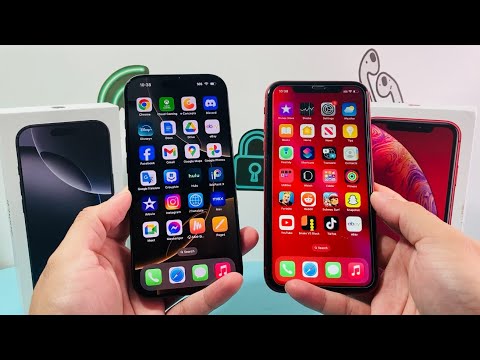
Silicon Architecture: A12 Bionic vs. A18 Pro
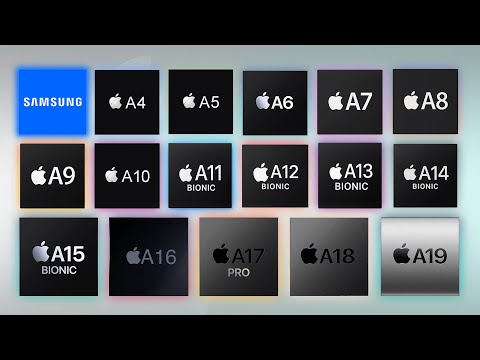
The iPhone XR was a pioneer in 2018, capable of 5 trillion operations per second (TOPS). However, its 3GB of RAM has become a critical bottleneck for modern automation. In contrast, the iPhone 16 Pro features the A18 Pro chip, built on a 3nm process, boasting a 16-core Neural Engine that delivers 35 TOPS. More importantly, the 16 Pro scales to 8GB of unified memory, the minimum requirement to run Apple Intelligence on-device. For users focused on software efficiency, this means the difference between cloud-dependent processing and lightning-fast local execution of generative tasks.
Software Automation and Apple Intelligence

The software experience on the iPhone 16 Pro is defined by Apple Intelligence. Unlike the XR, which is limited to standard iOS 18 features, the 16 Pro leverages system-wide Writing Tools, Genmoji, and an enhanced Siri with on-screen awareness. From a technical perspective, the iPhone 16 Pro allows for sophisticated Shortcuts automation integrated with the Action Button and Camera Control, enabling users to trigger complex API calls or AI-driven image analysis instantly—capabilities that the XR’s aging architecture simply cannot support due to thermal and memory constraints.
Imaging and Computational Photometry

The iPhone XR’s single 12MP sensor relied on early-stage Smart HDR. The iPhone 16 Pro introduces a 48MP Fusion camera system with a quad-pixel sensor that enables zero shutter lag for 48MP ProRAW photos. For technical professionals, the inclusion of the LiDAR scanner on the 16 Pro facilitates 3D spatial mapping and automated object recognition for AR workflows, a feature set entirely absent on the legacy XR platform.
AI Implementation Score
To quantify the leap in intelligence capabilities, we have rated both devices across key AI performance metrics:
| Metric | iPhone XR | iPhone 16 Pro |
|---|---|---|
| On-Device LLM Support | None | Full (Apple Intelligence) |
| NPU Throughput | 5 TOPS | 35 TOPS |
| Memory Bandwidth | Low (LPDDR4X) | High (17% increase over A17 Pro) |
| Workflow Automation | Basic Shortcuts | Action Button + AI Context |
| Overall AI Score | 15/100 | 98/100 |
Hardware Interconnectivity and I/O
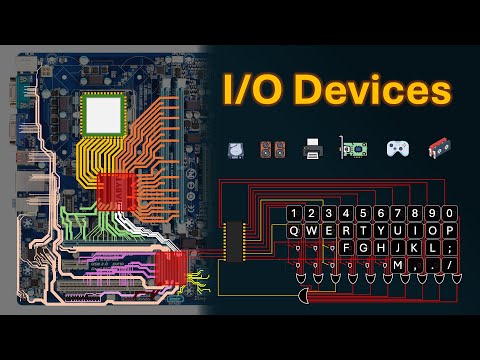
The transition from Lightning (USB 2.0) on the XR to USB-C (USB 3.0) on the 16 Pro is pivotal for data-heavy workflows. The 10Gbps transfer speeds of the 16 Pro allow for direct recording of ProRes video to external SSDs and faster debugging for developers. When paired with Wi-Fi 7 support, the 16 Pro ensures that even when AI tasks require cloud offloading (via Private Cloud Compute), the latency remains negligible compared to the XR’s aging Wi-Fi 5 antenna.
For the 'Smart AI Fix' community, the verdict is clear: the iPhone XR is a relic of the pre-generative era. The iPhone 16 Pro is an essential tool for anyone looking to leverage local AI for productivity, software development, and high-speed automation.
