
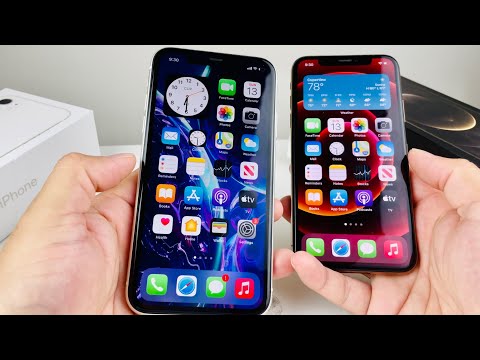
When analyzing the architectural transition from the Apple iPhone XS to the iPhone 11, we are looking at a pivotal moment in Apple’s hardware-software synergy. While the iPhone XS was the pinnacle of luxury design in 2018, the iPhone 11 introduced a fundamental shift in how Artificial Intelligence (AI) and machine learning handle mobile computational tasks. For users focused on automation and system efficiency, the choice between these two devices isn't just about screen quality; it’s about the silicon under the hood.
The Silicon Evolution: A12 vs. A13 Bionic
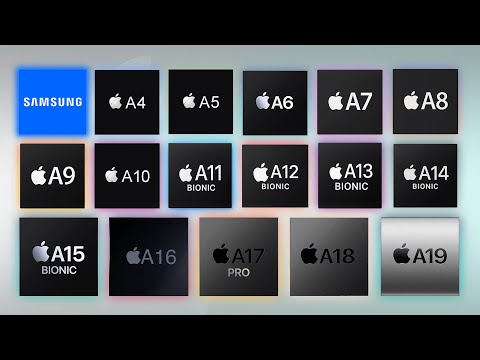
The core of this comparison lies in the jump from the A12 Bionic to the A13 Bionic chip. The A13 was specifically engineered for high-performance machine learning. It featured dedicated Machine Learning Accelerators on the CPU, capable of performing 1 trillion operations per second. For the end-user, this means that automated tasks—such as FaceID recognition, app pre-loading, and real-time photo processing—happen with significantly lower latency on the iPhone 11 compared to the XS.
While the iPhone XS features a 1st-generation 8-core Neural Engine, the iPhone 11’s version is 20% faster and 15% more power-efficient. In the context of AI efficiency, this allows the iPhone 11 to handle complex background tasks without draining the battery as aggressively as the XS might when pushed by modern, AI-heavy applications.
Computational Photography and Automation
One of the most visible upgrades in the iPhone 11 is the introduction of Deep Fusion and Night Mode. These are not just camera features; they are software-driven automation processes. Deep Fusion uses the Neural Engine to perform pixel-by-pixel analysis of multiple exposures, a process that requires the higher throughput of the A13 chip. The iPhone XS, despite having a superior OLED display, lacks the processing overhead to execute these specific AI-driven photography stacks natively.
Furthermore, the shift from a Telephoto lens (XS) to an Ultra-Wide lens (11) reflects a change in how Apple views spatial data. The iPhone 11 is better equipped for AR (Augmented Reality) automation and environmental scanning due to the wider field of view and faster ML processing of spatial depth.
Display vs. Performance: The Efficiency Trade-off
The iPhone XS holds a significant advantage in display technology with its Super Retina OLED panel. For developers and tech enthusiasts, the infinite contrast ratio and higher pixel density are superior to the iPhone 11’s Liquid Retina LCD. However, the LCD on the iPhone 11 is less taxing on the GPU and battery, allowing the A13 chip to prioritize AI background processes and sustained performance over raw visual fidelity. If your workflow relies on automation scripts and high-uptime connectivity, the efficiency of the iPhone 11’s hardware stack often outweighs the XS’s aesthetic advantage.
AI Implementation Score
To quantify the capabilities of these devices from a technical standpoint, we have rated them based on their machine learning and automation efficiency:
| Feature Category | iPhone XS Score | iPhone 11 Score |
|---|---|---|
| Neural Engine Throughput | 7/10 | 9/10 |
| Computational Photography | 6/10 | 9/10 |
| Power-to-AI Efficiency | 7/10 | 9/10 |
| Siri/Voice Automation Latency | 8/10 | 9/10 |
Final Verdict: Is it Worth the Upgrade?
From a Senior Tech Blogger perspective at 'Smart AI Fix', the upgrade from an iPhone XS to an iPhone 11 is only recommended if your priority is computational longevity. If you rely on AI-driven apps, Night Mode photography, or require the extra 2-3 hours of battery life provided by the A13’s efficiency, the iPhone 11 is the superior tool. However, if you value OLED display technology and a more compact, premium chassis, the iPhone XS remains a highly capable device for standard automation tasks, though it is approaching the end of its peak software support cycle.
