
Enabling Native Screen Capture for Technical Analysis
In the evolving landscape of generative AI and multi-modal software development, the ability to capture high-fidelity visual data directly from mobile hardware is essential. For developers, AI researchers, and automation specialists, the iPhone’s native screen recording tool serves as a foundational bridge for gathering training data, documenting algorithmic edge cases, and streamlining UI/UX troubleshooting. Enabling this feature is the first step in creating a visual feedback loop for automated systems.
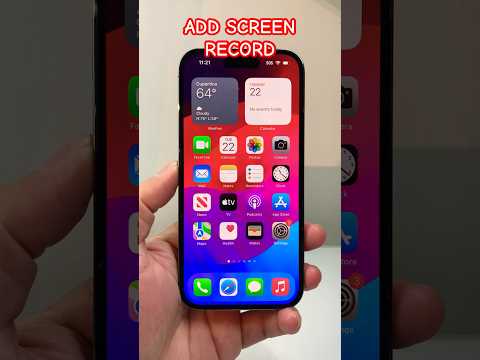
The Technical Configuration: Step-by-Step Integration
Unlike third-party applications that may introduce latency or privacy vulnerabilities, the integrated iOS screen recording utility operates at the kernel level, ensuring optimal frame rates and minimal system resource consumption. To integrate this tool into your daily workflow, follow these technical steps:
1. Access System Settings: Open the "Settings" application on your iOS device. This acts as the central hub for hardware-software interoperability.
2. Navigate to Control Center: Scroll down and select Control Center. This interface manages the "overlays" that allow for rapid execution of background processes without exiting active applications.
3. Append the Recording Module: Locate the list under "More Controls." Find Screen Recording and tap the green plus (+) icon. This action registers the recording binary within the Control Center’s active array.
4. Execution: Swipe down from the top-right corner (or up from the bottom on legacy hardware) to access the Control Center. The "Circle" icon represents the recording toggle. A three-second countdown initiates the buffer, allowing for clean entry into the software state you wish to document.
Leveraging AI Efficiency and Workflow Automation
From a Smart AI Fix perspective, screen recording is more than a visual log; it is a data ingestion tool. When paired with OCR (Optical Character Recognition) engines or computer vision models, recorded sessions can be parsed to identify software bugs or train robotic process automation (RPA) scripts. By long-pressing the record icon, users can also toggle the microphone, allowing for voice-over metadata—a critical component for fine-tuning voice-to-command AI models.
AI Implementation Score: Screen Recording Utility
| Metric | Score (1-10) | Technical Justification |
|---|---|---|
| Ease of Automation | 9/10 | Native integration allows for seamless triggers via iOS Shortcuts. |
| Data Fidelity | 8/10 | High-resolution capture suitable for computer vision training. |
| Workflow Optimization | 10/10 | Eliminates the need for external capture cards or tethered debugging. |
| AI Compatibility | 7/10 | Files are exported in .MP4/H.264, standard for ML processing pipelines. |
By mastering the deployment of screen recording, technical professionals can significantly reduce the "time-to-insight" when analyzing app performance or training neural networks to understand mobile interfaces. As we move toward more autonomous debugging environments, these native tools remain indispensable for human-in-the-loop verification.
