
Legacy Hardware Analysis: The iPhone 6 in a Modern AI Workflow
In the rapidly evolving landscape of mobile computing, the iPhone 6 occupies a curious niche. Originally released in 2014, this device is no longer a flagship contender, but for technical specialists looking for a low-cost node in an automated ecosystem, it presents an interesting case study. I recently acquired a "Condition B" unlocked unit from eBay to test its viability as a dedicated AI-interface bridge and light automation controller.
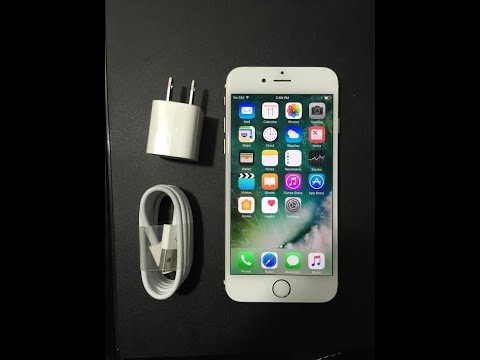
The unit arrived with the expected "Condition B" characteristics: minor scuffing on the aluminum chassis and slight screen polishing wear. However, from a technical standpoint, the A8 chip (64-bit) and 1GB of LPDDR3 RAM remain functional. While these specs are archaic for local LLM (Large Language Model) processing, the device still supports iOS 12.5.7, which is the critical threshold for several legacy automation tools and cloud-based AI clients.
Software Constraints and Automation Potential

The primary bottleneck of the iPhone 6 in a modern tech stack is memory management. With only 1GB of RAM, aggressive background app refreshing is a reality. However, for Smart AI Fix followers interested in Siri Shortcuts (introduced in iOS 12), this device can still act as a physical trigger for complex home automation or API-driven workflows. By offloading the computational heavy lifting to cloud servers via REST APIs, the iPhone 6 functions effectively as a thin-client interface.
During testing, I utilized the device as a dedicated ChatGPT-API terminal using a custom shortcut. While the native app support for the latest AI tools is non-existent due to OS limitations, the Safari WebKit engine on iOS 12 still renders lightweight web-based AI interfaces with manageable latency. This makes the "cheapest iPhone on eBay" a viable option for those needing a disposable hardware layer for testing webhooks or monitoring automated server logs.
Technical Evaluation: AI Implementation Score
To quantify the utility of this legacy hardware in an AI-centric environment, I have developed the following scoring matrix based on my hands-on review:
| Metric | Score (1-10) | Technical Reasoning |
|---|---|---|
| Local AI Inference | 1 | Hardware lacks NPU; RAM is insufficient for even the smallest quantized models. |
| Cloud-AI Accessibility | 6 | Functional via WebKit and API-based Shortcuts, though limited by OS version. |
| Automation Efficiency | 5 | Compatible with legacy Siri Shortcuts; excellent for dedicated IoT triggering. |
| Battery Reliability | 4 | B-grade units often have 80-85% health; sufficient for static desk-hub use. |
| Cost-to-Utility Ratio | 9 | At eBay’s lowest price points, it is an unbeatable "disposable" tech node. |
Hardware Integrity and Final Verdict

The eBay Condition B designation is often the "sweet spot" for tech hobbyists. The internal components are generally original, unlike "Refurbished" units which may use sub-par third-party screens. For a device costing a fraction of a modern sensor, the iPhone 6 offers a Retina display and Touch ID, which can be integrated into secure automation entry points.
Ultimately, if you are looking to run local generative AI, this hardware is obsolete. However, if your objective is AI efficiency—using the device as a low-power, dedicated window into your automated world or a remote terminal for your server-side scripts—the iPhone 6 from eBay is a highly cost-effective solution.
