
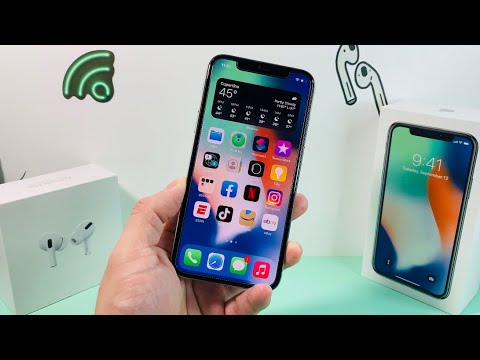
The iPhone X, launched as the definitive decennial milestone for Apple’s smartphone lineage, introduced the A11 Bionic chip—the first silicon from Cupertino to feature a dedicated Neural Engine. As we evaluate its viability in 2022, the conversation shifts from mere hardware aesthetics to the efficiency of its machine learning (ML) architecture and its ability to handle modern automated workflows.
The A11 Bionic and AI Efficiency

The A11 Bionic architecture utilizes a dual-core Neural Engine capable of handling up to 600 billion operations per second. While this was revolutionary in 2017, the 2022 landscape is dominated by the A15 and A16 chips, which operate in the trillions. However, for AI-driven automation and standard computational tasks, the iPhone X remains surprisingly resilient. The integration of CoreML allows the device to process on-device image recognition and natural language processing with a latency that remains acceptable for non-intensive professional use.
Software Longevity and OS Integration

Running the latest iterations of iOS, the iPhone X still benefits from Apple’s tight ecosystem integration. For users relying on Shortcuts and automated "If This Then That" (IFTTT) style sequences, the 3GB of RAM serves as a narrow but functional bottleneck. While background app refresh for heavy AI models may trigger aggressive RAM management, the device handles standard API calls and synchronization tasks with the reliability expected of a senior-tier legacy device.
Visual Computing and Face ID

The transition to Face ID was the iPhone X’s primary contribution to biometric AI. In 2022, the infrared projection and mathematical modeling of user faces remain secure and efficient. The OLED Super Retina display continues to provide the necessary contrast ratios for high-fidelity visual verification, though the absence of a high refresh rate (ProMotion) makes the UI feel less "fluid" compared to contemporary counterparts.
AI Implementation Score
To provide a technical benchmark for its performance in the current year, we have categorized its AI capabilities below:
| AI Task Category | Implementation Score (Out of 10) | Technical Note |
|---|---|---|
| Face ID Biometrics | 9/10 | Remains industry-standard for security. |
| Computational Photography | 7/10 | Lacks Deep Fusion and Night Mode processing. |
| On-Device ML (CoreML) | 6/10 | Susceptible to thermal throttling during long tasks. |
| Voice Recognition (Siri) | 8/10 | Natural Language Processing is handled efficiently. |
| System Automation | 7/10 | Limited by 3GB LPDDR4X RAM overhead. |
Technical Verdict for 2022

Is the iPhone X worth it in 2022? From a Smart AI Fix perspective, it serves as an excellent secondary testing device or a budget-entry point into the iOS ecosystem. While it lacks the raw power for real-time video AI upscaling or advanced AR (Augmented Reality) environments, its foundational AI efficiency for daily productivity, secure biometrics, and automated routines remains stable. It is a testament to Apple's silicon longevity, though power users should be wary of the aging battery and the lack of 5G connectivity.
