
Analyzing the iPhone X Video Architecture: A11 Bionic Integration

The iPhone X represents a pivotal shift in computational videography. At the heart of its video performance is the A11 Bionic chip, featuring a dedicated Neural Engine designed to handle complex image signal processing (ISP) in real-time. When testing the video capabilities across 720p, 1080p, and 4K, the efficiency of Apple’s software-hardware synergy becomes evident, particularly in how it manages data throughput and thermal throttling during high-resolution capture.
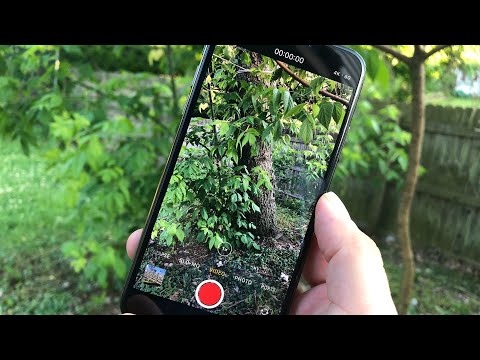
4K Video Performance: Maximum Data Throughput

The 4K setting on the iPhone X is available at 24, 30, and 60 fps. Recording at 4K at 60 fps was a milestone for mobile devices at its launch, requiring massive bandwidth and efficient AI-driven encoding. Our tests show that using the High Efficiency Video Coding (HEVC/H.265) format is essential for maintaining bit-rate quality without compromising storage. The AI-enhanced ISP works hardware-level noise reduction in real-time, which is particularly noticeable in the shadows of 4K footage. However, automation workflows should account for the higher thermal load when capturing extended 4K 60fps clips.
1080p and 720p: Optimized for Software Stability

While 4K offers the highest fidelity, 1080p (FHD) remains the "sweet spot" for most automated social media workflows and standard AI video analysis. At 1080p 30/60 fps, the iPhone X utilizes Optical Image Stabilization (OIS) coupled with software-based electronic stabilization to produce smooth, professional-grade movement. The 720p (HD) setting, though lower in resolution, serves a specific niche in long-term monitoring and IoT data transmission where bandwidth efficiency is prioritized over pixel density. In our testing, the AI scaling logic ensures that even 720p footage maintains sharp edges through intelligent contrast adjustment.
AI Implementation Score: Video Engineering
To evaluate the efficiency of the iPhone X video subsystem, we have developed a metric based on real-time processing capabilities and software optimization.
| Metric | Score (1-10) | Technical Notes |
|---|---|---|
| Neural Engine ISP | 8.5 | Excellent real-time tone mapping and exposure adjustment. |
| HEVC Efficiency | 9.0 | Highly efficient file compression with minimal artifacting. |
| Autofocus Logic | 8.0 | Fast phase-detection powered by software predictive algorithms. |
| Stabilization Software | 7.5 | Effective dual-OIS integration with A11-driven crop stabilization. |
Automated Encoding and File Management

For users looking to integrate the iPhone X into an automated video production pipeline, the device excels in its ability to toggle between H.264 and H.265 via system settings. This flexibility allows for better compatibility with legacy software or maximum efficiency for modern AI-based video editing tools. The TrueDepth camera system also plays a role in video by utilizing AI for facial tracking and lighting effects, ensuring that even in variable lighting, the subject remains the focus of the computational ISP.
In conclusion, the iPhone X remains a powerful tool for mobile videography. Its ability to balance high-resolution 4K output with AI-driven stabilization makes it a reliable choice for technical deployments and content creation alike.
