
The Shift to Software-Defined Connectivity: iPhone 17 eSIM Architecture

The release of the iPhone 17 has officially solidified the transition toward an all-eSIM infrastructure, leveraging Apple Intelligence to automate what was once a manual carrier hurdle. By removing the physical SIM tray globally, Apple has optimized the device’s internal geometry for larger thermal cooling arrays and enhanced NPU (Neural Processing Unit) efficiency. Activating the iPhone 17 is no longer just about cellular signal; it is about integrating the device into a synchronized AI ecosystem with minimal user friction.
AI Implementation Score: Activation Efficiency
To understand how the iPhone 17 performs compared to previous iterations, we have rated the activation workflow based on automation and software intelligence:
| Metric | Score (1-10) | Technical Reason |
|---|---|---|
| Setup Automation | 9.5 | Zero-touch carrier provisioning via iCloud backup. |
| Error Prediction | 8.0 | AI diagnostics identify signal conflicts before finalization. |
| Cross-Device Sync | 9.0 | Seamless handoff of secondary lines from Apple Watch/iPad. |
| Security Protocols | 10.0 | End-to-end encrypted eSIM Transfer via Secure Enclave. |
Step-by-Step: Activating the iPhone 17 eSIM
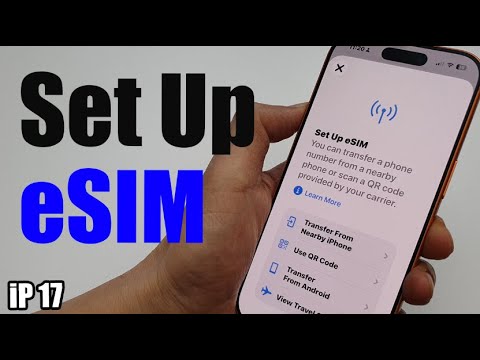
The activation process on the iPhone 17 is driven by iOS's automated provisioning engine. Follow these technical steps to ensure a successful deployment:
1. eSIM Quick Transfer: During the initial "Hello" setup screen, place your previous iPhone next to the iPhone 17. The Proactive Intelligence engine will detect the proximity and prompt a "Transfer Phone Number" notification. This uses a secure peer-to-peer connection to migrate your IMSI and ICCID data without carrier intervention.
2. Carrier-Bound Activation: If you purchased your iPhone 17 directly through a service provider, the eSIM is often pre-assigned to the IMEI2. Power on the device, connect to a Wi-Fi 7 network, and wait for the "Cellular Plan Ready to be Installed" banner to appear. Tap it, and the software handles the rest via background automation.
3. QR Code & Manual Entry: For enterprise or international lines, navigate to Settings > Cellular > Add eSIM. The iPhone 17's advanced computer vision will instantly recognize carrier QR codes even in low-light environments, thanks to improved ISP (Image Signal Processor) integration.
Advanced Troubleshooting and AI Diagnostics

The iPhone 17 introduces Self-Healing Network Protocols. If the eSIM fails to activate due to a server-side delay from the carrier, the device's internal diagnostics will automatically attempt to refresh the PDP (Packet Data Protocol) context in the background. Users no longer need to toggle Airplane Mode repeatedly; the A19 chip manages the handshake frequency to prevent battery drain while waiting for network confirmation.
For power users managing dual-eSIM configurations, the Smart AI Fix recommendation is to utilize the "Voice & Data" automation settings. This allows the iPhone 17 to intelligently switch data paths based on 5G signal density and latency metrics, ensuring your AI-driven applications—such as real-time translation or cloud-based LLM queries—never lose connectivity during the transition.
