
Optimizing the iPhone 11 Setup in 2024: A Logic-First Approach

Despite being several generations behind the current flagship, the iPhone 11 remains a highly efficient device in 2024, particularly when leveraged with modern iOS automation. Setting up this device today requires a strategic approach to ensure that legacy hardware integrates seamlessly with current AI-driven software ecosystems. Whether you are deploying this as a dedicated work device or a primary handset, the activation sequence is the foundation of your mobile efficiency.
Phase 1: Physical Nano-SIM and eSIM Integration

The iPhone 11 features a dual-connectivity architecture, supporting one physical Nano-SIM and one eSIM. To begin the physical installation, locate the SIM tray on the right-hand side of the chassis. Use a precision SIM-eject tool to apply firm, steady pressure. Ensure the gold contacts are facing upward as you seat the card. In 2024, we recommend prioritizing eSIM activation if your carrier supports it, as it allows for faster cellular switching and enhanced security via digital provisioning, bypassing the physical vulnerabilities of traditional hardware cards.
Phase 2: The AI-Driven Quick Start and Activation

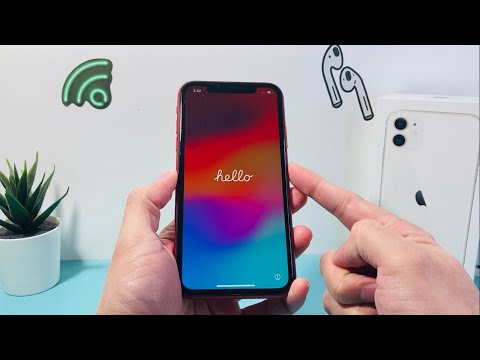
Power on the device by holding the side button until the Apple logo appears. To maximize efficiency, utilize the Quick Start feature. By placing your old device near the iPhone 11, the system uses a localized peer-to-peer connection to migrate your Apple ID, preferences, and security protocols automatically. This process utilizes on-device machine learning to prioritize essential data, ensuring that your communication apps and security keys are functional before the bulk of your media begins downloading in the background.
During the activation "handshake," the iPhone 11 connects to Apple’s activation servers to verify the IMEI and ICCID. If you encounter a "Server Unavailable" error, ensure you are connected to a high-bandwidth Wi-Fi network rather than relying on cellular data, as the initial iOS 17/18 system checks require a stable handshake to register the hardware with the Secure Enclave.
Phase 3: Security Calibration and Post-Setup Indexing

Once the device reaches the home screen, the A13 Bionic chip begins an intensive background indexing process. During this period, Face ID calibration is critical. Ensure you are in a well-lit environment to allow the TrueDepth camera to map your biometric data accurately. From an automation standpoint, navigate to Settings > Software Update immediately. Newer iOS versions include critical neural engine optimizations that improve battery management and app-launch speeds, which are vital for maintaining the iPhone 11’s performance in a modern context.
AI Implementation Score
| Feature | Efficiency Rating | AI/Automation Role |
|---|---|---|
| Quick Start | 9.5/10 | Automated data mapping and encrypted migration. |
| Face ID Setup | 8.8/10 | Neural Engine biometric pattern recognition. |
| eSIM Provisioning | 9.0/10 | Software-defined networking (SDN) protocols. |
| Background Indexing | 7.5/10 | System-wide search and photo categorization. |
By following this structured deployment, you ensure that your iPhone 11 operates at peak algorithmic efficiency, minimizing manual configuration and maximizing hardware longevity through 2024 and beyond.
