
The Hardware Constraint: A8 Architecture in a Post-Neural Engine World
Seven years in the lifecycle of a mobile chipset is an eternity, particularly when evaluating the Apple iPad Mini 4 in 2022. Launched in late 2015, the device is powered by the A8 chip—a dual-core processor that predates the dedicated Neural Engine hardware found in modern silicon. From a technical perspective, this means all machine learning (ML) tasks and AI-driven processes are offloaded to the CPU and GPU, resulting in higher latency and increased thermal throttling when running modern, intelligent applications.
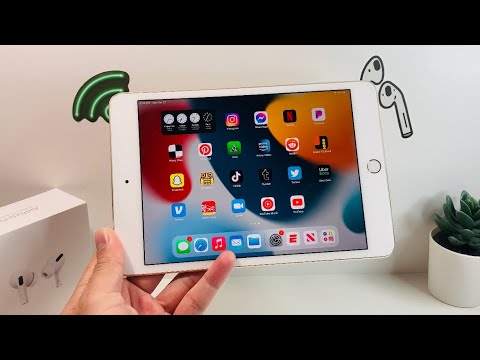
While the 2GB of LPDDR3 RAM was generous at launch, it now serves as a significant bottleneck for iPadOS 15. In a landscape where memory-swapping and background AI indexing are standard, the Mini 4 struggles to maintain multiple active processes. For users focused on automation and high-efficiency workflows, the hardware architecture is approaching its functional ceiling.
Software Longevity and Automation Capabilities
The iPad Mini 4 reached its terminal software cycle with iPadOS 15. While it does not support iPadOS 16, being on version 15 allows it to remain relevant for basic Apple Shortcuts and HomeKit integration. For a "Smart AI Fix" enthusiast, this device functions best as a dedicated Smart Home Controller rather than a primary workstation. It can effectively execute scheduled automations and manage IOT ecosystems, though the response time for "Hey Siri" requests is noticeably slower compared to devices featuring the M1 or M2 chips.
The absence of Live Text and advanced Visual Look Up features—which require at least an A12 Bionic chip—limit its utility in modern AI-assisted data extraction. If your workflow relies on real-time OCR or automated image segmentation, the iPad Mini 4 will fall short of professional requirements.
AI Implementation Score: 2022 Assessment
To quantify the device's viability for modern automated environments, we have benchmarked its performance across four critical categories:
| Category | Score (1-10) | Technical Reason |
|---|---|---|
| ML Inference Speed | 2/10 | Lack of dedicated Neural Engine; reliance on aging A8 CPU. |
| Automation Fluidity | 5/10 | Shortcuts app remains functional but suffers from UI lag. |
| Smart Home Hub Utility | 7/10 | Small form factor is ideal for wall-mounted dashboard use. |
| App Ecosystem Compatibility | 6/10 | iPadOS 15 supports most current apps, but performance is degraded. |
Final Technical Verdict: Is it Worth It?
In 2022, the iPad Mini 4 is only "worth it" under specific, narrow use cases. It is an excellent candidate for fixed-function automation. If you are looking for a low-cost, dedicated screen to run a Home Assistant dashboard or a legacy PDF reader, the hardware remains competent. However, for any task involving AI-driven content creation, heavy multitasking, or modern software development, the A8 architecture is obsolete.
For those seeking a compact device with future-proof AI capabilities, the jump to the iPad Mini 6 with the A15 Bionic is mandatory. The Mini 4 is a relic of a pre-AI era, serving now as a reliable tool for basic automation rather than a powerhouse for modern intelligence.
