
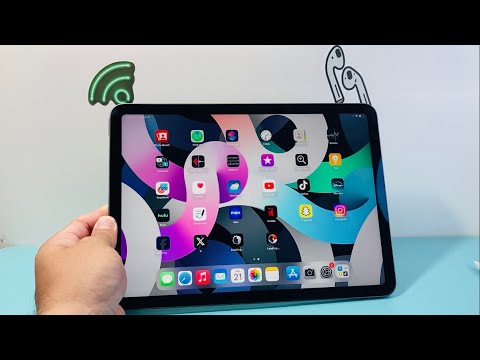
As we navigate the mid-2024 tech landscape, the iPad Air 4th Generation stands at a critical crossroads. Originally released in October 2020, this device introduced the modern, bezel-less aesthetic to the Air lineup, powered by the A14 Bionic chip. For users focused on AI efficiency, automated workflows, and smart ecosystem integration, determining whether this 4-year-old hardware remains viable requires a deep dive into its processing architecture and software ceiling.
The A14 Bionic: Still Capable or Architecturally Obsolete?
The A14 Bionic was a pioneer, being the first 5nm chip in a consumer device. It features a 16-core Neural Engine capable of performing 11 trillion operations per second. In 2024, this remains sufficient for standard machine learning tasks, such as OCR (Optical Character Recognition) in Live Text, real-time photo enhancements, and basic voice-to-text automation. However, we are seeing a divergence in the iPadOS ecosystem. While the Air 4 handles Shortcuts automation and multitasking fluidly, it lacks the 8GB of RAM found in M-series models, which is increasingly becoming the baseline for intensive local AI processing.
The "Apple Intelligence" Gap
The most significant technical caveat for 2024 buyers is the exclusion of Apple Intelligence. Apple’s suite of generative AI features—including on-device LLMs (Large Language Models) and advanced image generation—requires the M1 chip or later. Because the iPad Air 4 utilizes the A-series silicon, it will not support these native system-wide AI enhancements. For users relying on Smart AI Fix methodologies that prioritize cloud-based AI tools (like ChatGPT, Claude, or Midjourney), this limitation is negligible. However, for those seeking "on-device" privacy-centric AI, the Air 4 is technically hitting a ceiling.
Hardware Synergy and Workflow Integration
From a technical utility standpoint, the USB-C port remains the iPad Air 4’s strongest asset in 2024. It allows for seamless integration with high-speed SSDs, external displays, and ethernet adapters for stable automation scripts. The compatibility with the Apple Pencil 2 and Magic Keyboard ensures that it functions as a highly portable workstation for data entry and remote server management. Despite its age, the 10.9-inch Liquid Retina display provides the color accuracy necessary for light visual automation and UI/UX testing.
AI Implementation Score: iPad Air 4 (2024 Evaluation)
| Metric | Score (Out of 10) | Technical Reason |
|---|---|---|
| On-Device ML Performance | 6/10 | 16-core Neural Engine is efficient but lacks the throughput of M-series NPUs. |
| Cloud-AI Compatibility | 9/10 | Robust Wi-Fi 6 support ensures low latency for browser-based AI tools. |
| Multitasking & RAM | 5/10 | 4GB RAM limits the number of active background automation scripts. |
| Software Longevity | 7/10 | Likely to receive iPadOS updates until 2026, though missing "Intelligence" features. |
Final Technical Verdict

The iPad Air 4th Gen remains a strategic budget choice in 2024 for specific use cases. If your objective is a secondary device for smart home control, cloud-based AI interaction, and standard office automation, its current refurbished price point offers excellent ROI. However, for developers or power users looking to leverage the next generation of local generative AI, the hardware limitations of the A14 Bionic make the M2 Air or M4 Pro the more logical path for future-proofing your tech stack.
