
The Convergence of Ecosystems: Decoding the 'iAndroid' Virtualization on iPhone 14 Pro
The recent viral phenomenon dubbed "iAndroid"—frequently showcased via the #TryGalaxy campaign—represents a significant shift in how mobile operating systems interact through web-based virtualization. At its core, this experience is not a traditional OS flash but a sophisticated Progressive Web App (PWA) deployment that leverages the iPhone 14 Pro’s A16 Bionic chip to simulate Samsung’s One UI environment. For AI enthusiasts and system architects, this demonstrates the power of high-level software abstraction over rigid hardware-software coupling.
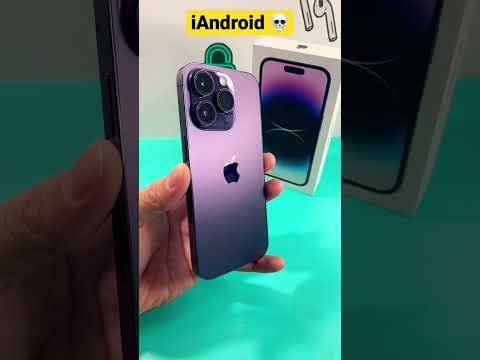
Software Abstraction and AI Simulation
The technical brilliance behind the "Try Galaxy" interface lies in its ability to mirror AI-driven features like "Circle to Search" or "Live Translate" within a sandboxed browser environment. By utilizing WebKit’s asynchronous processing, the simulation manages to execute complex UI animations that mimic the high-refresh-rate experience of a native Samsung device. From an automation perspective, this showcases how cloud-side AI processing can negate local OS restrictions, allowing an Apple device to effectively "think" like a Samsung flagship by offloading computational logic to remote servers.
Hardware Efficiency in Cross-Platform Emulation

Running a simulated Android environment on the iPhone 14 Pro provides a unique look at hardware resource allocation. The Neural Engine (NPU) within the A16 chip remains largely idle during this process, as the simulation relies on JavaScript engines rather than native machine learning frameworks like CoreML. However, the efficiency of the software stack ensures that the battery drain remains minimal, despite the continuous rendering of a foreign UI. This highlights a growing trend in AI efficiency: the move toward platform-agnostic software that prioritizes user experience over native kernel integration.
AI Implementation Score
To quantify the effectiveness of this cross-platform AI simulation, we have analyzed the integration based on several key technical metrics:
| Metric | Score (1-10) | Technical Note |
|---|---|---|
| UI Fluidity | 9.2 | Optimized via hardware-accelerated CSS/JS. |
| AI Feature Parity | 7.5 | Cloud-dependent; limited by browser sandbox. |
| Resource Optimization | 8.8 | Low overhead on Apple’s A-series silicon. |
| Automation Capability | 6.0 | Restricted by lack of deep system API access. |
Ultimately, the "iAndroid" trend is more than a marketing stunt; it is a proof of concept for software-defined mobility. As AI continues to move toward the edge, the specific hardware in your pocket may eventually matter less than the AI-driven software layer you choose to interact with. By breaking the walled garden via sophisticated web technologies, Samsung is effectively utilizing Apple's premium hardware to showcase its own software innovation and AI automation tools.
