
Understanding the Dual SIM Architecture in iPhone 17
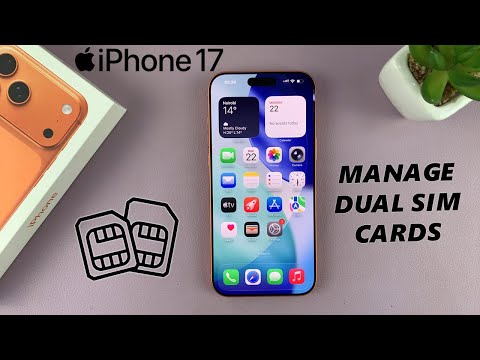
For the iPhone 17 lineup, Apple has refined the "Dual eSIM" and "Nano-SIM plus eSIM" configurations. While the US models continue to move toward an eSIM-only architecture, international variants still provide a physical slot. The inclusion of the iPhone 17 Air introduces a specialized, high-density eSIM module to maintain its ultra-slim profile without sacrificing 5G performance.
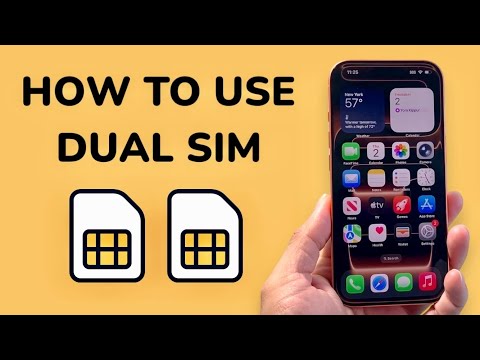
How to Activate Dual SIM on iPhone 17
To begin the setup, ensure you have your digital QR codes or carrier activation details ready. Follow these steps to leverage the Smart AI Fix method for seamless integration:
1. Primary Line Setup: Navigate to Settings > Cellular. If this is a new device, your primary eSIM will often transfer automatically during the Initial Setup Assistant using Apple’s secure proximity transfer.
2. Adding the Secondary Line: Tap on Add eSIM. You can choose to "Transfer From Nearby iPhone" or "Use QR Code." For enterprise users, the iPhone 17 now supports automated MDM (Mobile Device Management) pushes that install business lines silently in the background.
3. Labeling Your Lines: Assign labels such as "Business," "Travel," or "Personal." The Apple Intelligence engine uses these labels to suggest which line to use when messaging specific contacts based on historical data patterns.
AI-Driven Line Switching and Automation

The iPhone 17 series utilizes the A19/A19 Pro chip to manage dual-line standby more efficiently than previous generations. A new feature, Intelligent Data Switching, uses machine learning to monitor signal strength on both lines simultaneously. If your primary line experiences high latency or packet loss, the system automatically routes data through the secondary line to ensure uninterrupted AI processing and cloud sync.
AI Implementation Score
To evaluate the efficiency of the Dual SIM system on the iPhone 17 series, we have developed the following technical scorecard:
| Metric | Score (1-10) | Technical Reasoning |
|---|---|---|
| Setup Automation | 9.5 | Zero-touch eSIM deployment via iCloud and AI proximity sensing. |
| Energy Efficiency | 9.0 | A19 Pro chip optimizes "Dual SIM Dual Active" (DSDA) power consumption. |
| Network Switching | 8.8 | Predictive switching based on geolocation and signal history. |
| Software Integration | 9.2 | Deep integration with iOS 19 Focus modes and AI contact sorting. |
Managing Data and Default Lines

To maximize efficiency, go to Settings > Cellular > Cellular Data. Here, you can enable "Allow Cellular Data Switching." This is critical for users of the iPhone 17 Pro Max who require constant connectivity for high-bandwidth AI tasks. By enabling this, the device acts as a redundant system, ensuring that if one carrier fails, your automation scripts and background syncs remain active.
For those using the iPhone 17 Air, managing heat is essential. The AI system will occasionally throttle the secondary line if the device reaches a specific thermal threshold during heavy 5G usage, prioritizing the primary line to maintain device longevity.
