
Optimizing iOS Architecture: Technical Protocols for iPhone Reset and System Calibration
In the era of on-device machine learning and large-scale model integration, the iPhone functions less like a mobile handset and more like a localized edge-computing node. Over time, the accumulation of cache files, fragmented system logs, and redundant CoreML data can lead to processing latency. To maintain the Neural Engine's peak performance, understanding the technical hierarchy of resetting an iPhone is essential for any power user or developer.
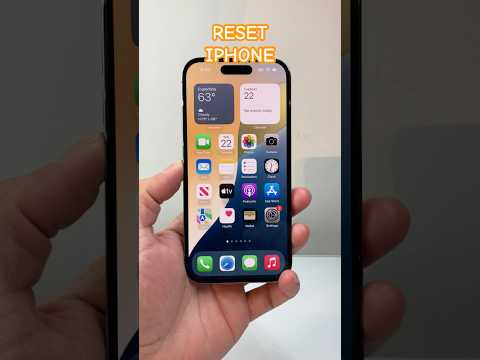
The Soft Reset: Clearing Volatile Memory

A soft reset, or "Force Restart," is the first line of defense against software-level hangs. This protocol interrupts the power cycle to the NAND flash storage and forces the kernel to reload. Unlike a standard shutdown, this process clears the RAM and terminates stuck background processes that may be consuming disproportionate CPU cycles.
To execute this on modern hardware (iPhone 8 through iPhone 15/16): 1. Press and quickly release the Volume Up button. 2. Press and quickly release the Volume Down button. 3. Press and hold the Side button until the Apple logo appears. This bypasses the software UI and triggers a hardware-level reboot.
The Factory Reset: Total System Re-indexing

For users experiencing persistent architectural instability or those preparing hardware for AI-driven automated deployment, a full Factory Reset (Erase All Content and Settings) is required. This process utilizes APFS (Apple File System) snapshots to revert the device to its "out-of-the-box" state, effectively wiping the encryption keys and rendering previous data unrecoverable.
Navigational Path: Settings > General > Transfer or Reset iPhone > Erase All Content and Settings. From a technical standpoint, this is the most efficient way to recalibrate On-Device AI models, as it forces the system to rebuild its localized vector database and search indices from scratch.
AI Implementation Score: Reset Efficiency
The following table evaluates various reset methods based on their impact on system automation and AI responsiveness:
| Reset Method | AI Implementation Score | Primary Technical Benefit |
|---|---|---|
| Force Restart | 4/10 | Clears active RAM and hung kernel processes. |
| Reset Network Settings | 6/10 | Optimizes data throughput for cloud-based AI processing. |
| Factory Reset (ER-All) | 10/10 | Eliminates system bloat for maximum ML compute availability. |
Cloud-Automation and Data Integrity

Before initiating a deep system reset, ensuring iCloud synchronization is paramount. Modern iOS versions use Differential Privacy algorithms to sync user data while maintaining security. When the reset is complete, the "Restore from Backup" feature uses automated logic to reinstall apps and re-apply system configurations, significantly reducing the downtime traditionally associated with manual hardware setups. This automation ensures that your personalized Siri intelligence and predictive text models are restored with minimal latency.
By treating the iPhone as a high-performance computational tool rather than a consumer device, professionals can utilize these reset protocols to ensure their software environment remains optimized for the next generation of Apple Intelligence and automated workflows.
