
The 2021 AirPods Pro: Analyzing the Synergy of Computational Audio and MagSafe Integration
The 2021 refresh of the AirPods Pro represents more than a simple hardware iteration; it serves as a benchmark for how automated ecosystem integration and AI-driven acoustics should function in a mature wearable market. While the physical aesthetics remain consistent with the original launch, the late 2021 units transitioned to include the MagSafe Charging Case, streamlining the power-management workflow for users within the Apple ecosystem.
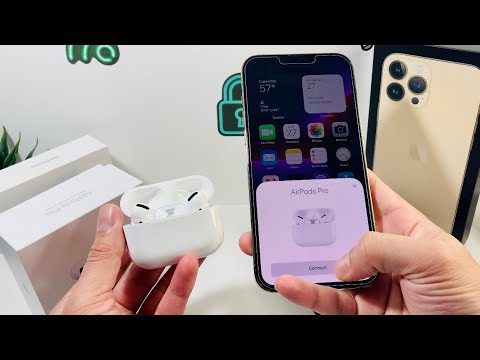
Unboxing and Hardware Efficiency

Upon unboxing the 2021 model, the emphasis is immediately placed on minimalist hardware deployment. The package includes the silicone ear tips (small, medium, large), a USB-C to Lightning cable, and the MagSafe-compatible case. From a technical standpoint, the hardware's primary driver is the H1 chip. This silicon is responsible for the low processing latency that enables real-time Active Noise Cancellation (ANC) and "Hey Siri" functionality, utilizing 10 audio cores to create a continuous loop of sound adjustment at 200 times per second.
Automated Setup and Software Synchronization

The setup process in 2021 remains the industry standard for software automation. By utilizing Bluetooth Low Energy (BLE) and proximity sensors, the AirPods Pro initiate an instant handshake with the iPhone. This "one-tap" setup is not merely a UI convenience; it triggers a backend iCloud synchronization that propagates the pairing data across all devices signed into the same Apple ID, including MacBooks, iPads, and Apple Watches. This eliminates the manual overhead of traditional multi-point pairing.
Furthermore, the Ear Tip Fit Test is an essential software-driven step. It uses internal microphones to measure the sound pressure level inside the ear canal compared to the driver's output, employing an algorithm to determine if the seal is acoustically optimal. This is a prime example of AI-assisted hardware calibration.
Computational Audio and Spatial AI

The 2021 user experience is defined by Spatial Audio with Dynamic Head Tracking. This feature utilizes the accelerometer and gyroscope within the AirPods and the iOS device to re-map the soundstage in real-time. By applying directional audio filters and subtly adjusting the frequencies each ear receives, the software simulates a 360-degree environment. This level of automation ensures that the "sweet spot" for audio remains consistent regardless of the user's physical movement.
AI Implementation Score
To evaluate the technical sophistication of the AirPods Pro in the context of automation and smart processing, we utilize the following scoring matrix:
| Metric | Score (1-10) | Technical Justification |
|---|---|---|
| Automated Connectivity | 10 | Instant proximity pairing with iCloud cross-device sync. |
| Real-time AI Processing | 9 | H1 chip executes ANC algorithms at 200Hz. |
| Power Efficiency | 8 | Dynamic power scaling based on active sensor usage. |
| Software Ecosystem | 9 | Deep integration with Find My network and Siri automation. |
In summary, the 2021 AirPods Pro unboxing and setup experience highlights the transition of consumer audio from passive hardware to active, software-defined peripherals. The inclusion of MagSafe is a tactical hardware update, but the true value lies in the computational audio stack that manages sound through constant algorithmic intervention.
