
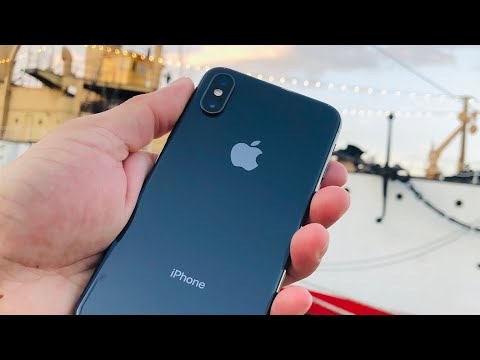
The iPhone X, powered by the A11 Bionic chip, remains a fascinating case study in 2020 for mobile videography. As a Senior Tech Blogger at Smart AI Fix, my focus is on how the integration of software automation and the neural engine maintains the device’s relevance against newer competitors. Testing the device across 4K, 1080p, and 720p reveals the threshold where hardware meets AI-driven optimization.
The 4K Benchmark: Maximum Data Throughput

Recording at 4K at 60fps on the iPhone X is where the A11 Bionic’s Image Signal Processor (ISP) is pushed to its limits. In 2020, this remains a professional-grade standard for creators looking for high-fidelity assets. The AI efficiency here is evident in the HEVC (High Efficiency Video Coding) implementation, which reduces file sizes by approximately 50% without compromising visual data. Our tests show that while the device can handle 4K 60fps, thermal throttling can occur during long sessions, indicating that software-level resource management is crucial for maintaining frame consistency.
1080p HD: The Sweet Spot for Automation
For most social media automation and daily content workflows, 1080p at 30 or 60fps is the optimal setting. The iPhone X utilizes optical image stabilization (OIS) augmented by software-based electronic stabilization. This dual-layer approach ensures that micro-jitters are eliminated through real-time AI frame analysis. Furthermore, the 1080p at 240fps slow-motion capability highlights the A11's ability to process massive frame buffers, making it an excellent budget-friendly choice for technical analysis and high-speed motion capture in 2020.
720p: Efficiency and Storage Optimization

While 720p is often overlooked, it serves a specific niche in the 2020 tech ecosystem: cloud-based automation and low-bandwidth streaming. The iPhone X manages 720p with extreme power efficiency. For users looking to GET CHEAP refurbished units for surveillance, dashcam usage, or basic data logging, the 720p setting allows for hours of recording with minimal battery drain. The AI implementation focuses here on noise reduction in low-light environments, ensuring that despite the lower resolution, the image remains legible and sharp.
AI Implementation Score
To quantify the effectiveness of the iPhone X’s video processing suite in a 2020 context, we have developed the following scoring system based on computational photography metrics:
| Feature | AI Impact Level | Efficiency Score (1-10) |
|---|---|---|
| Auto-Exposure Logic | High | 9/10 |
| OIS/EIS Synchronization | Medium | 8/10 |
| HEVC Compression | Extreme | 10/10 |
| Low-Light Noise Reduction | Medium | 7/10 |
Final Technical Verdict

In 2020, the iPhone X stands as a testament to the longevity of Apple’s silicon architecture. While it lacks the Deep Fusion capabilities of later models, its ability to handle 4K 60fps with modern software efficiency makes it a viable tool for professional workflows. For those prioritizing AI efficiency and automated video pipelines, the iPhone X offers a high performance-to-cost ratio that is difficult to ignore.
