
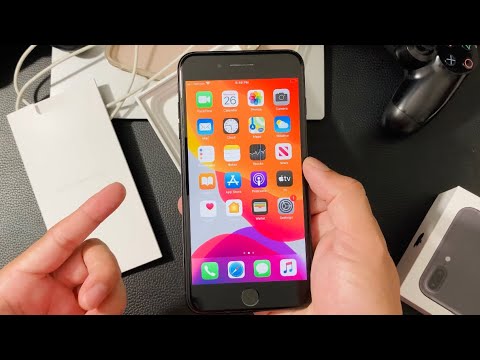
The secondary smartphone market has become a goldmine for developers and automation enthusiasts looking for "disposable" hardware to run dedicated AI tasks or legacy software testing. Recently, I acquired a Black iPhone 7 Plus via Mercari to evaluate its performance as a budget-friendly node in a localized automation environment. While the device was released in 2016, its 3GB of RAM—a significant jump over the standard iPhone 7—makes it a surprisingly resilient candidate for modern background processes.
The Mercari Acquisition Experience

Purchasing through Mercari requires a data-driven approach. The platform’s algorithm often surfaces "Great Deals" that are technically sound but cosmetically flawed. This specific unit was listed as "Good," and upon unboxing, the matte black finish showed minimal micro-abrasions. For those looking to scale their hardware lab, using a referral code during sign-up can yield up to $30 in credits, effectively bringing the cost of a legacy device like the iPhone 7 Plus down to the price of a mid-range power bank.
Hardware Architecture and AI Potential
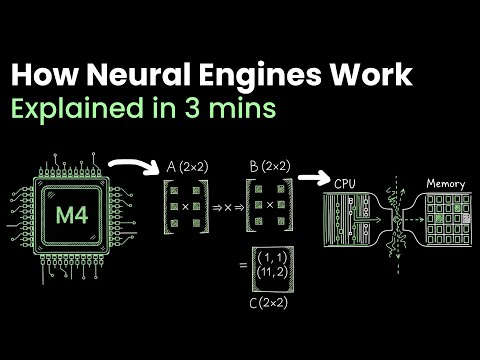
The A10 Fusion chip was Apple’s first foray into a quad-core design, separating high-performance cores from high-efficiency cores. In the context of AI efficiency, this allows the iPhone 7 Plus to handle low-level background automation (such as HomeKit triggers or IFTTT sequences) without significant thermal throttling. Although it lacks the dedicated Neural Engine found in the A11 and later, its GPU is still capable of handling basic CoreML tasks and image recognition at a respectable latency.
Software and Automation Workflow

Running iOS 15, the iPhone 7 Plus still supports a vast library of automation tools. During testing, I utilized Shortcuts to automate data scraping tasks and monitored the device’s ability to interface with cloud-based LLMs like ChatGPT and Claude. While the local processing power is limited, the device serves as an excellent thin client for AI-driven workflows. The 5.5-inch Retina display remains sharp enough for debugging scripts, and the physical Home button offers a tactile reliability that gesture-based navigation sometimes lacks in a dedicated testing environment.
AI Implementation Score
To provide a technical benchmark for this device in a modern AI ecosystem, I have rated its performance across four key metrics:
| Metric | Score (1-10) | Technical Justification |
|---|---|---|
| Local ML Inference | 3/10 | Lack of dedicated Neural Engine limits complex CoreML execution. |
| Automation Stability | 8/10 | iOS 15 stability allows for consistent background Shortcut execution. |
| Battery Efficiency (Idle) | 7/10 | Efficiency cores manage background AI API calls effectively. |
| App Compatibility | 6/10 | Supports major AI clients (ChatGPT/Gemini) but lacks latest OS features. |
Final Technical Verdict

The iPhone 7 Plus from Mercari is not a primary driver for a tech professional in 2024, but it is a high-value asset for AI automation. Its 3GB of RAM provides the necessary overhead to prevent app crashes during multi-step automation workflows, and the current market price makes it an unbeatable "sandbox" device for testing new deployments before pushing them to flagship hardware.
