
The Apple iPhone 6s, powered by the A9 architecture, enters 2026 as an eleven-year-old legacy device. From the perspective of modern computational efficiency and AI-driven automation, the 2nm and 3nm chips of today have rendered the 14nm process of the A9 effectively obsolete for any real-time edge processing. In a landscape dominated by generative AI and on-device machine learning, the iPhone 6s represents the final vestiges of a purely "reactive" hardware era.
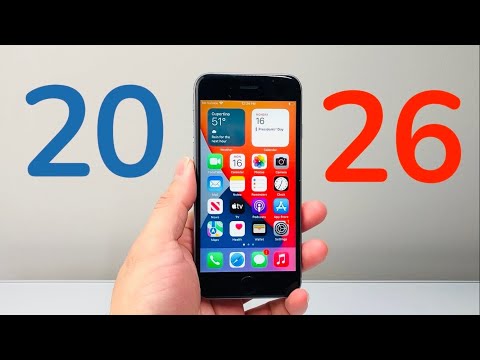
The Bottleneck: A9 Silicon and 2GB LPDDR4 RAM
In 2026, the primary constraint is not just the clock speed of the 1.85 GHz Dual-core Twister CPU, but the 2GB of LPDDR4 RAM. Modern AI workflows—specifically those utilizing Local LLMs (Large Language Models) or advanced image synthesis—require a minimum of 8GB of unified memory to function without aggressive swap-file latency. The iPhone 6s lacks the Neural Engine found in the A11 Bionic and later, meaning every AI-related task is pushed to the CPU/GPU, leading to thermal throttling and extreme battery drain within minutes of operation.
Software Obsolescence and Security Risks

Stuck at iOS 15, the iPhone 6s is now several generations behind the current iOS 19 or 20 ecosystem. For users focused on Smart AI Fix methodologies, this is a critical failure point. Most modern automation frameworks and API integrations (such as updated versions of Shortcuts or cross-platform AI agents) require modern kernels for sandboxing and execution. Furthermore, the lack of security patches for over three years makes the device a significant liability for anyone handling sensitive data or automated financial transactions.
AI Implementation Score
To quantify the utility of the iPhone 6s in a modern automated environment, we have benchmarked its performance across several AI-centric categories:
| Category | Score (1-10) | Technical Limitation |
|---|---|---|
| On-Device LLM Execution | 1 | Insufficient RAM; no NPU acceleration. |
| Cloud-Based AI Access | 4 | Browser-only; high latency due to aging Wi-Fi 5. |
| Automated Task Processing | 2 | Legacy Shortcuts app; lacks modern triggers. |
| Computer Vision/OCR | 3 | Slow frame-rate processing in Live Text. |
| Voice Assistant Latency | 2 | High Siri response delay; no offline processing. |
Hardware Degradation in 2026

The 1715 mAh battery, even if replaced with a third-party unit, cannot cope with the power demands of modern, unoptimized web scripts. The 12MP camera, while historically significant, lacks the Deep Fusion and Smart HDR computational pipelines that define modern mobile photography. For a senior tech professional, using a 6s in 2026 is an exercise in managing frustration rather than maximizing efficiency.
The Verdict: A Museum Piece

The iPhone 6s is no longer a viable tool for productivity or AI integration. Its value in 2026 is strictly sentimental or as a low-tier dedicated music player (thanks to the 3.5mm headphone jack). If your goal is to leverage AI efficiency or smart automation, the hardware simply cannot sustain the necessary instruction sets required by modern software architectures. It is time to transition to silicon that supports hardware-level neural processing.
