
Evaluating the iPhone 6S Plus in 2026 requires a shift in perspective from traditional consumer reviews to high-level systems analysis. At eleven years post-launch, this device represents a legacy era of Apple hardware—specifically the A9 architecture—operating in a world now dominated by edge computing and local Large Language Models (LLMs). At Smart AI Fix, we look at whether this hardware can still serve as a functional node in a modern automated workflow.
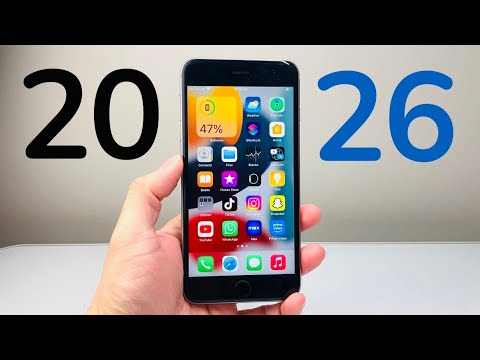
Hardware Limitations in the Generative AI Era

The primary bottleneck for the iPhone 6S Plus in 2026 is its 2GB of LPDDR4 RAM. Modern AI-driven applications and automation scripts require significant memory overhead to manage background processes. While the 5.5-inch Retina display remains aesthetically pleasing, the dual-core Twister CPU struggles with the computational demands of 2026-era web standards and encrypted communication protocols. For users focused on AI efficiency, the lack of a dedicated Neural Engine means all machine learning tasks are offloaded to the CPU/GPU, leading to significant thermal throttling and rapid battery depletion.
Software and Security: The iOS 15 Ceiling

The iPhone 6S Plus is permanently capped at iOS 15. In 2026, this presents a critical security risk. Most modern automation tools and API integrations require updated SDKs found only in iOS 18 or later. Without the latest security patches, using this device as a primary daily driver exposes the user to vulnerabilities that modern "Sandboxing" and "Lockdown Modes" have long since mitigated. From a Smart AI Fix standpoint, the inability to run the latest "Apple Intelligence" features makes the device a "dumb" terminal in a smart ecosystem.
AI Implementation Score
To quantify the utility of the iPhone 6S Plus for technical users, we have developed the following scoring matrix based on current 2026 standards:
| Category | Score (Out of 10) | Technical Reason |
|---|---|---|
| Local LLM Processing | 0/10 | Incompatible; insufficient RAM and no NPU. |
| Automation (Shortcuts) | 3/10 | Basic triggers work; complex API calls lag. |
| Cloud-Based AI Access | 4/10 | Usable via browser, but UI rendering is slow. |
| Energy Efficiency | 2/10 | 14nm process is highly inefficient by 2026 standards. |
Use Cases: Is There Any Value Left?

While the iPhone 6S Plus fails as a high-performance tool, it retains niche value in dedicated automation roles. It can serve as a static home automation controller (HomeKit), a dedicated music streamer via the legacy 3.5mm headphone jack, or a secondary monitor for server logs. However, for any task involving real-time data processing or AI-assisted multitasking, the hardware is functionally obsolete. The A9 chip simply cannot keep pace with the asynchronous demands of modern software architecture.
Final Verdict: In 2026, the iPhone 6S Plus is a museum piece. For the price of a refurbished unit, users are better served by an iPhone 13 or later, which provides the baseline hardware acceleration required for the current AI-first software landscape.
