
iPhone 16 Pro Max Storage Architecture: Selecting the Optimal Tier for AI Efficiency

The iPhone 16 Pro Max, powered by the A18 Pro silicon, represents a shift from traditional mobile computing to on-device AI processing. When selecting between the 256GB, 512GB, and 1TB tiers, users must look beyond photo libraries and consider Neural Engine swap files, local LLM (Large Language Model) caching, and high-bitrate data throughput. For the modern automation specialist, storage capacity is no longer just about "space"—it is about computational headroom.
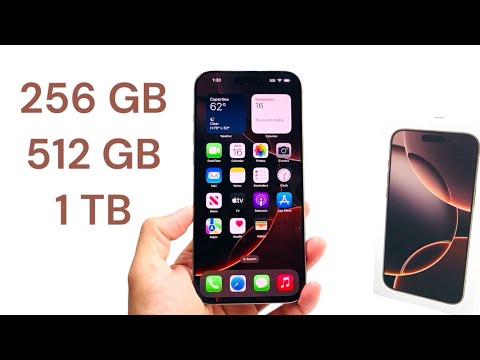
256GB: The Cloud-Centric Efficiency Tier

The 256GB base model is the strategic choice for users who have mastered automated cloud integration. With the rise of Apple Intelligence, iOS 18 utilizes sophisticated data tiering to move colder data to iCloud while keeping active AI models in high-speed local storage. This tier is ideal for professionals who rely on Google Photos, iCloud Drive, or private NAS systems for long-term archival. However, users should be aware that recording 4K ProRes video at 60fps requires external storage via USB-C on this model, as the internal NAND flash can saturate quickly under high-bitrate workloads.
512GB: The Sweet Spot for Local AI Processing
For power users focused on software efficiency and on-device automation, the 512GB variant is the optimal professional standard. This capacity provides enough "breathing room" for the A18 Pro’s Neural Engine to maintain large vector databases for local RAG (Retrieval-Augmented Generation). As Apple Intelligence begins to index your emails, messages, and files to provide contextual awareness, the metadata and index files will grow. The 512GB tier ensures that these system-level databases do not compete with your app cache or media library, preventing thermal throttling during intensive background indexing.
1TB: The Workflow Automation & Professional Media Tier

The 1TB flagship tier is designed for two specific personas: the ProRes cinematographer and the AI developer. If your workflow involves recording in ProRes Log for professional color grading, a single minute of footage can consume up to 6GB of space. Beyond media, the 1TB model offers the highest parallel write endurance. For those running local developer environments, large offline language models, or complex Shortcuts automations that process massive datasets locally, the 1TB model ensures that the NAND flash remains in a high-performance state without hitting the "SSD slowdown" threshold that occurs when drives exceed 80% capacity.
AI Implementation Score Table
To help visualize the efficiency of each tier regarding modern software demands, we have developed the following AI Implementation Score based on local processing power, caching capacity, and automation fluidness:
| Storage Tier | Cloud Reliance | On-Device AI Caching | Efficiency Score |
|---|---|---|---|
| 256GB | High (80%) | Moderate | 7.5/10 |
| 512GB | Moderate (40%) | Optimal | 9.5/10 |
| 1TB | Low (10%) | Extreme/Future-Proof | 10/10 |
Technical Verdict: Which Should You Buy?

For the average professional looking for maximal ROI and software longevity, the 512GB iPhone 16 Pro Max is the superior choice. It provides the necessary architecture to handle the next three years of Apple Intelligence updates without forcing the user into aggressive manual storage management. However, if your daily stack involves zero-latency local workflows or heavy video production, the 1TB model is a mandatory investment in hardware overhead. The 256GB remains a viable "lean" option only if your automation workflows are strictly cloud-native.
