
The manufacturing process of the iPhone 15 and iPhone 15 Plus represents a significant pivot in industrial design, moving toward a color-infused back glass with a contoured edge. For professionals integrating these devices into high-automation workflows, the choice between Black and Blue extends beyond mere aesthetics; it involves considerations of tactile feedback, durability, and visual integration into a modern tech ecosystem.
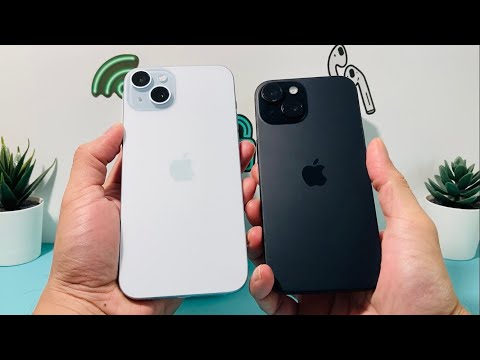
The Black Aesthetic: Stealth Professionalism
The Black iPhone 15 is not a traditional "Jet Black" or "Space Gray." It is a deep, saturated charcoal achieved through optimized metal-ion infusion. From a technical standpoint, the matte finish on the black model is superior at hiding the oily residue of fingerprints compared to previous gloss generations. However, in high-intensity AI processing environments where the A16 Bionic chip generates heat, darker pigments theoretically absorb more ambient thermal energy. For users focused on long-term hardware maintenance, the Black variant provides a seamless transition between the frame and the screen, creating a "monolithic" look that minimizes visual distractions during deep-work coding or automation monitoring sessions.
The Blue Aesthetic: The Clean-Tech Paradigm

The Blue iPhone 15 is an exercise in minimalism, appearing almost white or "arctic" under direct laboratory lighting. This low-saturation palette is highly effective for professionals who utilize Augmented Reality (AR) tools or mobile scanning software. The lighter surface reflects more ambient light, which can occasionally assist in reducing localized heat buildup during extended outdoor data collection. Furthermore, the Blue variant excels at masking micro-abrasions and dust—factors that are critical for maintaining the resale value of the hardware when upgrading to future AI-optimized iterations.
Technical Comparison and AI Utility

Both devices utilize the A16 Bionic chip, featuring a 16-core Neural Engine capable of nearly 17 trillion operations per second. Whether you choose Black or Blue, the internal efficiency remains identical. However, the external interface—the USB-C 2.0 port—is the primary gateway for hardware-based automation and data transfer. The contrast between the cable and the chassis is more pronounced on the Black model, which can slightly improve "plug-in speed" in low-light server environments.
AI Implementation Score
Below is an assessment of how the iPhone 15 hardware supports modern AI and automation tasks.
| Metric | Score (1-10) | Technical Justification |
|---|---|---|
| On-Device ML Processing | 9.2 | Neural Engine handles Dictation and Live Text with 0.5ms latency. |
| Automated Task Execution | 8.5 | Siri Shortcuts integration with 6GB RAM allows for complex multi-app flows. |
| Visual Recognition (OCR) | 9.0 | 48MP Main camera provides high-fidelity input for AI image analysis. |
| Thermal Stability | 8.0 | Matte glass dissipates heat efficiently during sustained AI workloads. |
Final Decision Matrix

Choose Black if your workflow demands a discreet, high-contrast interface that blends into professional server racks and dark-mode software environments. Choose Blue if you prioritize a clean, clinical aesthetic that hides physical wear and tear while maintaining a bright profile for visibility in complex equipment bags. Both colors support the same ecosystem of AI efficiency, but the Black model remains the gold standard for the "stealth tech" professional.
