
Hardware Integrity and eBay Logistics

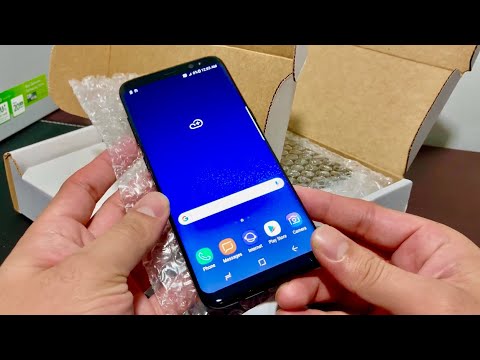
Procuring a "cheap" Galaxy S8 from eBay in 2020 carries inherent risks, primarily regarding battery degradation and OLED burn-in. The unit unboxed for this review, sourced at a sub-$140 price point, arrived with minimal cosmetic wear but displayed the typical lithium-ion capacity loss expected of a 3000mAh cell from 2017. From a technical standpoint, the Infinity Display (5.8-inch Super AMOLED) still rivals mid-range 2020 handsets in terms of pixel density and color accuracy, making it an excellent terminal for monitoring automated workflows or visual data streams.
Software and AI-Driven Efficiency

The Galaxy S8 currently rests on Android 9.0 (Pie) with Samsung’s One UI 1.0. While it lacks the official Android 10 update, the software environment is remarkably stable for running background automation scripts via Tasker or IFTTT. The integration of Bixby Routines (via side-loading or third-party wrappers) allows the S8 to function as a dedicated smart home controller or a localized AI processing hub. Despite the aging 10nm chipset—either the Snapdragon 835 or the Exynos 8895—the device handles neural network-based image processing for social media apps with surprising agility, though thermal throttling becomes evident during prolonged computational loads.
Legacy AI Implementation Score
To evaluate how this hardware stacks up against 2020 standards for automated efficiency and smart features, we have developed the following scoring metric:
| Category | Score (Out of 10) | Technical Observation |
|---|---|---|
| Neural Processing Speed | 5/10 | Limited by lack of a dedicated NPU; relies on CPU/GPU clusters. |
| Voice Assistant Integration | 7/10 | Bixby and Google Assistant remain fully functional with low latency. |
| Background Automation | 8/10 | One UI power management allows for consistent script execution. |
| Camera AI (Post-processing) | 6/10 | Single-lens setup relies on legacy algorithms; lacks modern night-mode AI. |
| Energy Efficiency (AI-managed) | 4/10 | Adaptive battery tech struggles with aged physical cells. |
The Verdict for the Power User

In mid-2020, an eBay-sourced Samsung Galaxy S8 serves best as a secondary device for technical specialists. It is no longer the primary choice for heavy machine learning tasks or high-end mobile gaming, but its form factor and high-resolution display make it a "smart" investment for developers needing a testbed for legacy Android optimization. If the eBay seller provides a verified battery health report, the S8 remains a superior choice to most brand-new "budget" phones that utilize inferior eMMC storage and low-tier MediaTek processors.
Ultimately, the Galaxy S8 represents the era where Samsung moved toward intelligent software design. By repurposing this hardware for automated tasks or as a dedicated AI hub, users can extract significant value far exceeding the initial $130 investment. Stay tuned to @Technomentary for further deep dives into refurbished hardware optimization.
