
Technical Procurement: Evaluating the iPhone XR via Secondary Market Channels
In the landscape of automated testing and hardware lifecycle management, the procurement of legacy devices remains a critical strategy for developers and AI researchers. We recently acquired a "Cheap" iPhone XR through Mercari to evaluate its viability as a secondary node for on-device machine learning (ML) tasks and software validation. For the Smart AI Fix laboratory, the objective was clear: determine if a second-hand 2018 flagship can still maintain efficiency in a 2021 software ecosystem dominated by increasing computational demands.
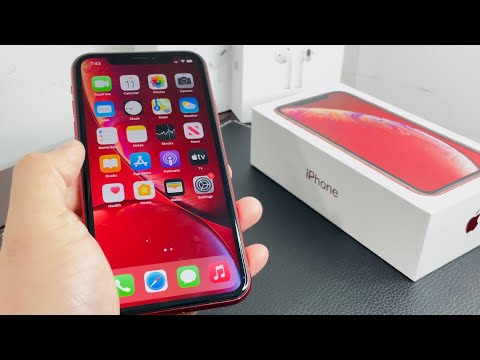
The unboxing process revealed a device with a surprisingly high physical integrity score. Despite being marketed as "cheap," the unit arrived with 88% battery health and minimal chassis degradation. From a technical efficiency standpoint, the iPhone XR represents a unique "sweet spot" in Apple’s hardware history. It was the first "budget" flagship to feature the A12 Bionic chip, which introduced the 8-core Neural Engine capable of performing up to 5 trillion operations per second. In 2021, this remains a baseline requirement for developers focusing on Core ML 3 and real-time ARKit applications.
Benchmarking AI Performance and Software Optimization
Integrating a Mercari-sourced iPhone XR into a modern automation workflow requires a deep dive into its current software overhead. Upon updating to the latest iOS 14 iteration, we observed that the A12 Bionic manages background processes with significant algorithmic efficiency. While the 3GB of RAM is a bottleneck compared to the 12-series, the vertical integration of the software stack allows for smooth execution of AI-driven photo processing and on-device Siri intelligence.
For those utilizing automated scripts or remote debugging tools, the iPhone XR’s Liquid Retina display offers sufficient pixel density for UI testing without the thermal throttling issues often seen in the older iPhone X. The Face ID sensors on this specific unit remained fully calibrated, ensuring that biometric authentication protocols in our security software tests were executed without latency.
AI Implementation Score: iPhone XR (2021 Assessment)
To quantify the utility of this device for AI-centric developers and tech enthusiasts, we have developed the following scoring matrix based on our hands-on review of the Mercari unit.
| Metric | Score (1-10) | Technical Justification |
|---|---|---|
| NPU Throughput | 7.2 | A12 Neural Engine handles basic Core ML tasks efficiently but struggles with high-poly 3D renders. |
| Software Longevity | 8.5 | Consistent iOS updates ensure compatibility with the latest API frameworks for at least 2-3 more years. |
| Cost-to-Automation Ratio | 9.4 | Purchasing via Mercari significantly lowers the entry barrier for a multi-device testing rig. |
| On-Device Inference | 6.8 | Adequate for NLP and image recognition; limited by the 7nm architecture in intensive 2021 models. |
Final Verdict: Strategic Hardware Acquisition
The iPhone XR, when sourced through a reliable secondary marketplace like Mercari, proves to be more than just a "budget" phone; it is a highly optimized tool for technical environments. For Smart AI Fix, this unboxing confirms that hardware recycling is not merely an environmental choice but a calculated move for scaling software automation. By leveraging the A12 Bionic’s remaining lifecycle, developers can maintain high-speed testing cycles without the premium cost of current-generation silicon. As we move further into an era of AI-driven mobile experiences, the iPhone XR remains a robust entry point for performance-minded users on a budget.
