
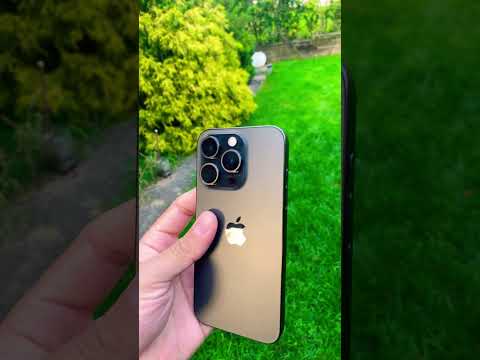
The release of the iPhone 15 Pro marks a pivotal transition in Apple’s silicon strategy, shifting the focus from raw graphical throughput to specialized artificial intelligence (AI) and machine learning (ML) efficiency. At the heart of this device lies the A17 Pro, the industry’s first 3-nanometer chip. While the 6-core GPU captures the headlines for gaming, the real story for tech enthusiasts lies in the redesigned 16-core Neural Engine, which is now up to 2x faster, capable of performing nearly 35 trillion operations per second (TOPS).
Architectural Efficiency and On-Device Inference

In the world of AI automation, latency is the enemy. The iPhone 15 Pro addresses this by prioritizing on-device inference. Unlike cloud-based AI, which requires data round-trips to a server, the A17 Pro’s Neural Engine allows for sophisticated transformer-based language models to run locally. This is most evident in the improved autocorrect and predictive text systems in iOS 17, which leverage a localized large language model (LLM) to learn individual user patterns without compromising data privacy. For power users, this means a more fluid, context-aware interface that anticipates needs through proactive automation.
The Action Button: A Gateway to AI Shortcuts

The replacement of the traditional mute switch with the Action Button is more than a hardware tactile upgrade; it is a dedicated trigger for automated workflows. By mapping the Action Button to the Shortcuts app, users can initiate complex AI-driven sequences. For instance, a single press can trigger a Voice-to-Text summary using OpenAI’s Whisper API, or launch a localized Python script to organize files. This level of hardware-software integration transforms the iPhone 15 Pro into a modular tool for productivity automation, allowing users to bypass several UI layers to execute high-level tasks.
Computational Photography and Semantic Rendering

The Photonic Engine on the iPhone 15 Pro utilizes AI to merge the best pixels from a high-resolution image with an image optimized for light capture. The Deep Fusion process now happens faster thanks to the increased bandwidth between the ISP (Image Signal Processor) and the Neural Engine. This enables Semantic Rendering, where the AI identifies specific subjects in a frame—such as skin, hair, or sky—and applies distinct adjustments to each. The result is a sophisticated computer vision pipeline that functions in real-time, effectively automating the role of a professional photo editor.
AI Implementation Score
To quantify the advancements in this iteration, we have evaluated the iPhone 15 Pro across four critical AI metrics:
| Metric | Score (1-10) | Technical Justification |
|---|---|---|
| On-Device Inference | 9.5 | A17 Pro 3nm architecture enables rapid localized LLM processing. |
| Automation Versatility | 9.0 | Action Button + Shortcuts integration offers deep OS-level control. |
| Computer Vision | 9.2 | Photonic Engine and LiDAR provide superior depth mapping and object recognition. |
| Energy Efficiency | 8.8 | Optimized Neural Engine reduces battery drain during heavy ML workloads. |
The Future of Edge Computing
The iPhone 15 Pro is not merely a smartphone; it is an edge-computing node. By moving the heavy lifting of machine learning from the cloud to the pocket, Apple is setting a new standard for AI privacy and speed. As developers begin to tap into the A17 Pro’s dedicated ML hardware, we can expect a surge in third-party apps that utilize real-time generative AI and automated data processing, making the device an essential tool for the modern technical professional.
