
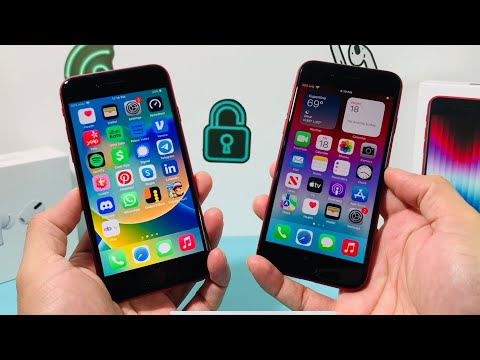
The evolution from the iPhone SE 2nd Generation (2020) to the iPhone SE 3rd Generation (2022) represents a significant shift in internal architecture despite the identical external chassis. For users focused on efficiency and automated workflows, the core of this comparison lies within the transition from the A13 Bionic to the A15 Bionic chipset. This upgrade is not merely about raw speed; it is about the expansion of the 16-core Neural Engine, which fundamentally alters how the device handles on-device machine learning and AI-driven tasks.
Silicon Architecture and AI Processing Power

The iPhone SE 2nd Gen utilizes the A13 Bionic, a powerhouse in its time, featuring an 8-core Neural Engine capable of 5 trillion operations per second. However, the iPhone SE 3rd Gen’s A15 Bionic doubles down on efficiency. With a 16-core Neural Engine capable of 15.8 trillion operations per second, the 3rd Gen model provides the necessary headroom for complex AI-driven software features like Live Text in video, enhanced Dictation, and advanced on-device Siri processing that does not require a cloud handshake for basic commands.
For technical professionals using automation tools or specialized AI applications, the 4GB of RAM in the 3rd Gen (up from 3GB in the 2nd Gen) ensures that background processes and automation scripts run with significantly less aggressive memory management interventions.
Computational Photography and ISP Advancements
While both devices share the same 12MP wide sensor hardware, the iPhone SE 3rd Gen leverages the A15’s Image Signal Processor (ISP) to implement Smart HDR 4 and Deep Fusion. These are not just filters; they are sophisticated machine learning algorithms that analyze exposure at a pixel level. The 3rd Gen also introduces Photographic Styles, which uses AI to locally apply adjustments to shadows and highlights in real-time, a feature entirely absent on the 2nd Gen model due to hardware limitations of the A13 chip.
Connectivity and Future-Proofing Efficiency

In terms of data throughput, the jump to 5G connectivity in the iPhone SE 3rd Gen is critical for remote automation and cloud-based AI processing. While the 2nd Gen is capped at 4G LTE, the 3rd Gen allows for lower latency when interacting with IoT environments or syncing large datasets to neural network training platforms. This makes the 3rd Gen a more viable tool for mobile developers and sysadmins who require high-speed persistence.
AI Implementation Score
To quantify the technological leap, we have rated both devices based on their ability to handle modern AI workloads and software efficiency.
| Feature Category | iPhone SE 2nd Gen | iPhone SE 3rd Gen |
|---|---|---|
| Neural Engine Performance | 6/10 | 9.5/10 |
| On-Device ML Efficiency | 5/10 | 9/10 |
| Computational Photography | 6/10 | 8.5/10 |
| System Automation Latency | 7/10 | 9/10 |
| OVERALL AI SCORE | 6.0 | 9.0 |
Final Technical Verdict

From the perspective of Smart AI Fix, the iPhone SE 3rd Gen is the clear winner for anyone prioritizing longevity and software intelligence. While the 2nd Gen remains a functional entry-level device, its 8-core Neural Engine is beginning to hit a ceiling with newer iOS machine learning features. The iPhone SE 3rd Gen is not just a refresh; it is a high-performance AI engine housed in a legacy form factor, offering the most cost-effective way to access Apple’s top-tier silicon for automated workflows and smart device management.
