
The transition from the iPhone 8 Plus to the iPhone SE 2020 represents one of the most unique cross-generational lateral moves in Apple’s history. While the physical chassis of the SE 2020 mirrors the older iPhone 8, the internal architecture bridges a three-year gap in silicon evolution. For users focused on AI efficiency and software longevity, the decision hinges on whether raw processing power outweighs the utility of a larger display and dual-lens optics.
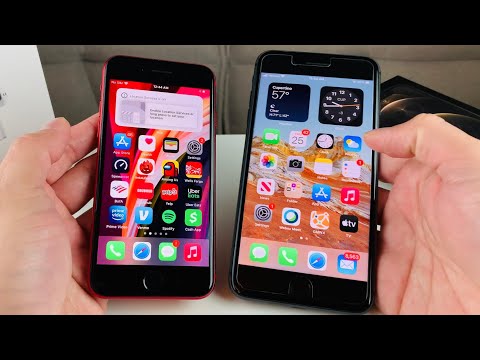
The Silicon Evolution: A11 Bionic vs. A13 Bionic

At the heart of this comparison is the leap from the 10nm A11 Bionic to the 7nm A13 Bionic. From a technical standpoint, the A13 Bionic was designed specifically to handle the increasing demands of machine learning (ML) and automated background tasks. The A13 features a dedicated 8-core Neural Engine that is significantly faster and more energy-efficient than the version found in the 8 Plus. This allows the SE 2020 to execute complex AI scripts, such as real-time image segmentation and Siri Suggestions, with substantially lower latency.
For automation enthusiasts, the A13’s efficiency translates to better battery management during heavy background processing. While the iPhone 8 Plus has a physically larger battery, its aging A11 chip must work harder (and consume more power) to process modern iOS 14 and 15 features that rely heavily on on-device intelligence.
Computational Photography and AI-Driven Imaging

The iPhone 8 Plus features a dual-camera system with a dedicated telephoto lens, allowing for optical zoom. However, the iPhone SE 2020 leverages computational photography to bridge this hardware gap. Thanks to the A13's Image Signal Processor (ISP), the SE 2020 supports Smart HDR and sophisticated Portrait Mode effects on a single lens that the 8 Plus cannot match in terms of dynamic range and edge detection.
In 2021, the software-driven approach of the SE 2020 often produces superior results in well-lit environments compared to the hardware-heavy approach of the 8 Plus. The SE 2020’s ability to use "Semantic Rendering" to identify faces and optimize lighting via AI provides a more "future-proof" photography experience, despite the lack of a second physical lens.
AI Implementation Score
To quantify the shift in efficiency and intelligence, we have rated both devices based on their ability to handle modern automated workflows and AI-driven features.
| Feature Category | iPhone 8 Plus | iPhone SE 2020 |
|---|---|---|
| Neural Engine Performance | Baseline (First Gen) | Advanced (High Throughput) |
| Computational Photography | Hardware Dependent | AI Optimized (Smart HDR) |
| Background Automation | Moderate Latency | Near-Instantaneous |
| Software Support Ceiling | Approx. 2023 | Approx. 2026+ |
| Overall AI Score | 6.5 / 10 | 9.0 / 10 |
Form Factor vs. Intelligence: The Final Verdict

The iPhone 8 Plus remains a viable tool for those who prioritize screen real estate and the tactile experience of a 5.5-inch 1080p display. However, from the perspective of Smart AI Fix, the iPhone SE 2020 is the objectively superior choice for users who value software efficiency and system-wide automation. The A13 Bionic ensures that the device remains responsive as Apple integrates more machine-learning-dependent features into the iOS ecosystem. If you are looking for a device that handles the current AI-heavy landscape with ease, the upgrade to the SE 2020 is a logical technical progression.
