
The architectural divide between the iPhone 15 Pro and the iPhone 15 Plus represents more than just a pricing tier; it is a fundamental divergence in how mobile hardware handles Artificial Intelligence (AI) and machine learning (ML) workloads. As we transition into an era where on-device LLMs (Large Language Models) become the standard for mobile automation, the silicon powering these devices dictates their long-term viability in an AI-driven ecosystem.
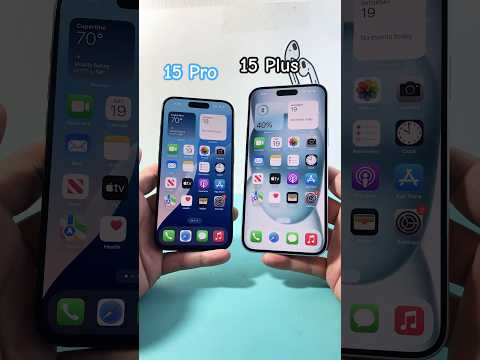
Silicon Architecture: A17 Pro vs. A16 Bionic
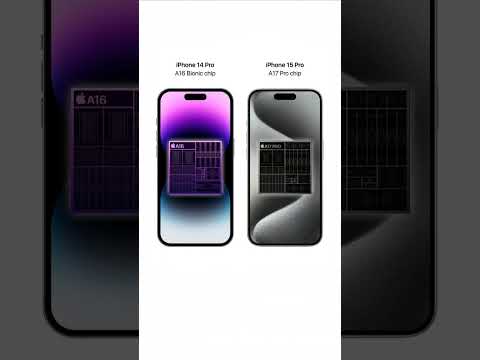
The core of the comparison lies in the A17 Pro chip found in the 15 Pro, versus the A16 Bionic in the 15 Plus. The A17 Pro is the industry's first 3nm process chip, featuring a 16-core Neural Engine capable of 35 trillion operations per second (TOPS). This is nearly double the throughput of the A16 Bionic found in the 15 Plus. For users focusing on AI efficiency, this translates to significantly lower latency when running local inference models, such as real-time transcription or predictive text algorithms.
The 15 Plus, while highly capable for general tasks, relies on the 4nm A16 Bionic. While this chip was a powerhouse for the previous generation, it lacks the dedicated hardware acceleration for Ray Tracing and the specialized "Pro" GPU cores that assist in offloading complex graphical AI tasks. For developers utilizing Core ML, the 15 Pro offers a more robust environment for testing intensive automation workflows.
Computational Photography and Image Signal Processing

In the realm of AI-driven photography, the 15 Pro takes a massive lead through its Photonic Engine and LiDAR scanner. The LiDAR scanner isn't just for depth; it provides critical spatial data that the Neural Engine uses to map environments for Augmented Reality (AR) and instant autofocus in low-light AI processing. The 15 Plus utilizes high-end computational photography, but it lacks the ProRAW capabilities and the hardware-level data throughput required for 4K 60fps ProRes encoded video, which requires massive real-time data compression—a feat of AI-assisted hardware optimization.
Software Automation and Future-Proofing

From a software perspective, the integration of Apple Intelligence marks the most significant split. The iPhone 15 Pro is equipped with 8GB of RAM, whereas the 15 Plus utilizes 6GB. In the context of AI efficiency, RAM is the primary bottleneck for on-device generative models. The 15 Pro's additional memory headroom allows it to keep larger language models resident in memory, ensuring that Siri and system-wide automation tools respond without the lag associated with clearing cache or swapping memory.
AI Implementation Score
To better understand how these devices stack up for power users focused on automation and AI, we have developed the following comparison matrix:
| Feature Category | iPhone 15 Pro | iPhone 15 Plus |
|---|---|---|
| Neural Engine Throughput | 35 TOPS (High) | 17 TOPS (Medium) |
| On-Device LLM Capacity | Optimized (8GB RAM) | Limited (6GB RAM) |
| Spatial AI/AR Tasks | Advanced (LiDAR) | Basic (Visual Only) |
| Automation Latency | Ultra-Low | Moderate |
| Overall AI Efficiency Score | 9.5/10 | 7.0/10 |
Final Technical Verdict

For the 'Smart AI Fix' audience, the choice is clear. The iPhone 15 Plus is an excellent device for those prioritizing battery longevity and a large display for standard consumption. However, for those looking to leverage machine learning, advanced software automation, and the upcoming suite of generative AI tools, the iPhone 15 Pro is the only viable option. Its 3nm architecture and superior RAM management provide the necessary foundation for the next generation of intelligent mobile computing.
