
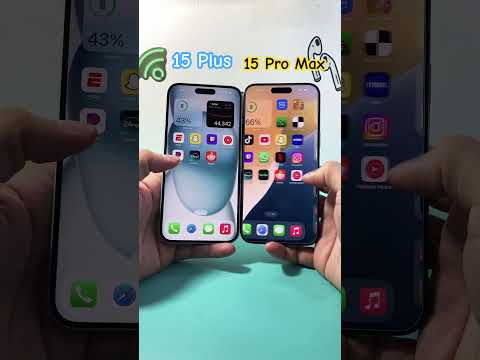
The architectural divergence between the iPhone 15 Pro Max and the iPhone 15 Plus represents a significant shift in how Apple prioritizes local machine learning (ML) capabilities. While both devices occupy the "large format" category, the underlying silicon dictates a vast difference in how they handle high-frequency AI workloads and automated background processes.
The Silicon Gap: A17 Pro vs. A16 Bionic

The iPhone 15 Pro Max is powered by the A17 Pro, the industry's first 3nm chipset. From an AI efficiency perspective, this transition to 3nm allows for a higher transistor density, directly benefiting the 16-core Neural Engine. This engine is capable of 35 trillion operations per second (TOPS), nearly doubling the throughput of previous generations. For users running complex Shortcuts automations or on-device LLM (Large Language Model) tasks, the A17 Pro offers the thermal headroom required to prevent throttling during sustained inference.
Conversely, the iPhone 15 Plus utilizes the A16 Bionic (4nm). While still highly capable for daily tasks, its Neural Engine is optimized for the software landscape of 2022. In the context of "Apple Intelligence," the 15 Plus faces a hardware bottleneck. The A16 Bionic lacks the unified memory bandwidth necessary to run Apple's upcoming on-device generative models efficiently, relegating much of its AI processing to the cloud rather than the edge.
Memory Constraints and AI Agent Longevity
In the realm of technical automation, RAM is the silent gatekeeper. The iPhone 15 Pro Max features 8GB of LPDDR5X RAM, whereas the 15 Plus is limited to 6GB. This 2GB delta is critical for AI efficiency. Modern AI agents and advanced image synthesis tools require significant memory residency to function without killing background processes. Users who rely on heavy multi-tasking—such as running automated data scraping scripts while processing 48MP ProRAW images—will find the 15 Pro Max significantly more stable.
Computational Photography and Computer Vision

Both devices utilize Apple’s Photonic Engine, but the 15 Pro Max leverages its superior ISP (Image Signal Processor) and LiDAR scanner to enhance spatial computing capabilities. The 15 Pro Max uses AI-driven depth mapping to facilitate Spatial Video capture for the Vision Pro ecosystem. The 15 Plus, lacking a LiDAR sensor, relies entirely on stereoscopic data from its dual-lens system, which offers less precision for AR-based automation and object recognition tasks.
AI Implementation Score
To quantify the technical disparity for the Smart AI Fix community, we have developed the following scoring matrix based on hardware-software synergy:
| Metric | iPhone 15 Plus | iPhone 15 Pro Max |
|---|---|---|
| NPU Throughput (TOPS) | 17 TOPS | 35 TOPS |
| On-Device LLM Support | Limited/Cloud-reliant | Full Support (Apple Intelligence) |
| Memory Bandwidth | High | Ultra-High (8GB RAM) |
| Neural Thermal Efficiency | 7.5/10 | 9.5/10 |
| Total AI Efficiency Score | 72% | 94% |
Conclusion: The Automation Verdict
For the technical professional focusing on software automation and the integration of AI into daily workflows, the iPhone 15 Pro Max is not merely a "pro" version of a phone; it is a specialized edge-computing node. The 15 Plus remains a powerful consumer device, but its inability to support the full suite of Apple Intelligence features makes it a suboptimal choice for those looking to future-proof their personal AI infrastructure.
