
Hardware Aesthetics and the Evolution of Color-Infused Glass

The release of the iPhone 15 and 15 Plus marks a significant pivot in Apple’s material science approach. Unlike previous generations where color was applied as a surface coating, the iPhone 15 utilizes an industry-first color-infused back glass. This process involves strengthening the glass with a dual-ion exchange process before polishing it with nanocrystalline particles. When comparing the Black versus the Pink variants, the technical output of this process yields two very different visual frequencies.
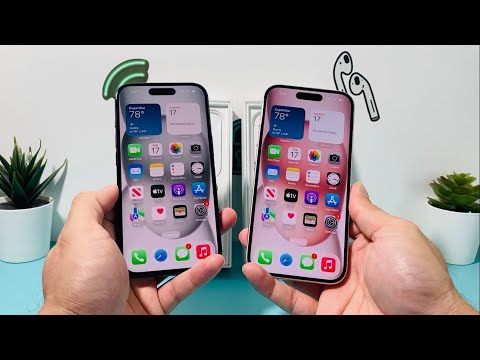
The Black iPhone 15 is a masterclass in professional minimalism. It is not a deep "piano black" but rather a sophisticated, matte charcoal that absorbs light efficiently, minimizing reflections that can distract during high-intensity mobile workflow sessions. For the Smart AI Fix professional, the Black model represents a "stealth" aesthetic that aligns with high-end server hardware and workstation environments.
Conversely, the Pink iPhone 15 is a departure from the "Rose Gold" of previous years. It utilizes a soft, pastel saturation that feels organic rather than metallic. From a design-to-software integration perspective, the Pink model targets the "Tech-Chic" demographic, where the device serves as a vibrant extension of a digital-first lifestyle. Both models feature a contoured edge and a ceramic shield front, ensuring that regardless of the pigment, the structural integrity remains optimized for longevity.
Computational Photography and AI Efficiency

While the color choice is subjective, the underlying AI architecture powering these devices is uniform. The A16 Bionic chip serves as the engine for the iPhone 15's advanced computational photography. The 48MP Main camera utilizes AI-driven pixel binning to produce 24MP images that balance high resolution with efficient storage management. This is critical for users leveraging automation tools to sync large media libraries to cloud environments.
The Neural Engine in the iPhone 15 has been optimized to handle complex machine learning tasks 17% faster than its predecessor. This affects everything from Smart HDR 5 rendering to real-time voice isolation during VOIP calls. Whether you choose the Black or Pink chassis, the software efficiency ensures that background processes—such as indexing photos for AI-based search or running On-Device Siri commands—do not throttle the user experience.
AI Implementation Score: iPhone 15 Series
To quantify the technological leap in these devices, we have calculated the AI Implementation Score based on the synergy between the A16 Bionic and iOS 17/18 automation capabilities.
| Feature Category | Implementation Score (1-10) | Technical Note |
|---|---|---|
| Neural Engine Throughput | 9.2 | 16-core architecture optimized for localized LLM tasks. |
| Computational Imaging | 9.5 | Next-gen portraits with focus and depth control via AI. |
| Automation & Shortcuts | 8.8 | Seamless integration with Siri Suggestions and NLU. |
| Battery Intelligence | 9.0 | AI-driven charging cycles to extend lithium-ion lifespan. |
Final Analysis: Professionalism vs. Expression

Choosing between Black and Pink on the iPhone 15 is a decision between two distinct professional philosophies. The Black model is the standard for those prioritizing a distraction-free, automated workflow where the hardware disappears into the background of the task. It is the efficient choice for developers and system architects.
The Pink model, however, challenges the notion that high-performance tech must be monochromatic. It is a bold statement for creators who utilize AI-driven content creation tools (like CapCut or Lightroom) and want their hardware to reflect a modern, creative identity. Technologically, both devices are identical, featuring the USB-C transition which simplifies cable management and enhances data transfer speeds for local backups.
