
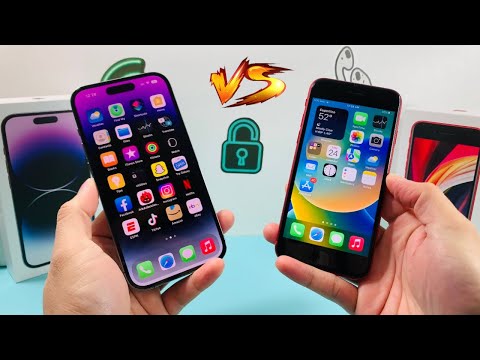
The transition from the iPhone SE (2nd Gen, 2020) to the iPhone 14 Pro represents more than just a hardware iteration; it is a fundamental shift in computational architecture. For users leveraging their devices for high-level automation, AI-driven workflows, and neural processing, the gap between the A13 Bionic and the A16 Bionic is substantial. In this deep dive, we evaluate whether the efficiency gains in machine learning (ML) and system-level automation justify the jump to Apple’s 2022 flagship.
Processing Power: A13 vs. A16 Bionic Neural Engines
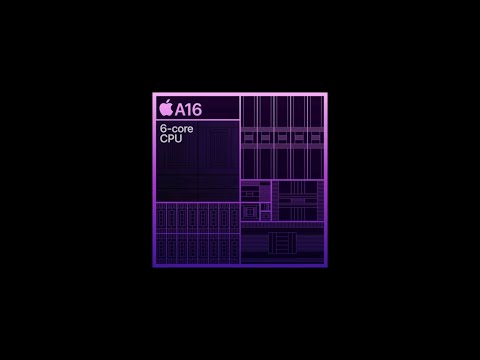
The heart of the comparison lies in the Neural Engine. The iPhone SE (2020) features an 8-core Neural Engine capable of 5 trillion operations per second. While sufficient for basic Siri commands and light photo processing in 2020, it struggles with modern on-device ML tasks. The iPhone 14 Pro, powered by the 4nm A16 Bionic, boasts a 16-core Neural Engine capable of 17 trillion operations per second.
For users of 'Smart AI Fix' workflows, this translates to near-instantaneous execution of complex iOS Shortcuts, faster OCR (Optical Character Recognition) via Live Text, and significantly reduced latency when running local LLM-based assistants. The A16’s efficiency ensures these tasks consume less power, preserving battery life during heavy automation cycles.
Display Technology and UI Automation Efficiency

The move from the 4.7-inch LCD on the SE to the 6.1-inch Super Retina XDR OLED on the 14 Pro is a massive upgrade in terms of information density. The inclusion of ProMotion technology (up to 120Hz) isn't just about smooth scrolling; it reduces input lag, making manual UI interactions and macro executions feel significantly more responsive.
Furthermore, the Always-On Display and the Dynamic Island introduce new layers of passive information monitoring. For tech professionals, the ability to track real-time API status or automation progress via the Dynamic Island without waking the device provides a level of workflow integration that the aging SE design cannot match.
Computational Photography and AI Imaging

The iPhone SE (2020) relies on a single 12MP sensor with early-stage computational photography. In contrast, the iPhone 14 Pro utilizes a 48MP Main sensor and the Photonic Engine. This software-hardware synergy allows for Deep Fusion and Smart HDR 4, which use the Neural Engine to perform pixel-by-pixel analysis for noise reduction and dynamic range expansion.
From an AI perspective, the 14 Pro's ability to shoot in ProRAW allows developers and creators to feed high-fidelity data into image-recognition algorithms or generative AI models with much higher accuracy than the compressed output of the SE.
AI Implementation Score: Technical Breakdown
To quantify the upgrade value from an AI and automation perspective, we have developed the following scoring matrix:
| Feature Category | iPhone SE (2020) | iPhone 14 Pro | AI Efficiency Gain |
|---|---|---|---|
| Neural Engine Ops | 5 Trillion/sec | 17 Trillion/sec | +240% |
| System RAM | 3 GB LPDDR4X | 6 GB LPDDR5 | +100% (Bandwidth Focus) |
| ML On-Device Tasks | Moderate Latency | Near-Instant | High |
| Computational Video | Standard 4K | Cinematic / Action Mode | Significant Neural Overhead |
Connectivity and Future-Proofing

The iPhone SE (2020) is capped at 4G LTE. The iPhone 14 Pro incorporates Sub-6GHz and mmWave 5G, alongside the Qualcomm X65 modem. For remote automation and cloud-based AI processing, the 14 Pro offers significantly lower ping and higher throughput. When dealing with large datasets or cloud-syncing heavy AI models, the bandwidth advantage of the 14 Pro is a decisive factor.
Conclusion: Is the Upgrade Justified?
If your usage is limited to basic communication, the iPhone SE (2020) remains a functional tool. However, for anyone integrated into the Smart AI Fix ecosystem—relying on high-speed automation, on-device machine learning, and advanced computational imaging—the iPhone 14 Pro is a necessary evolution. The jump in Neural Engine throughput alone makes it a superior node for the modern AI-driven lifestyle.
