
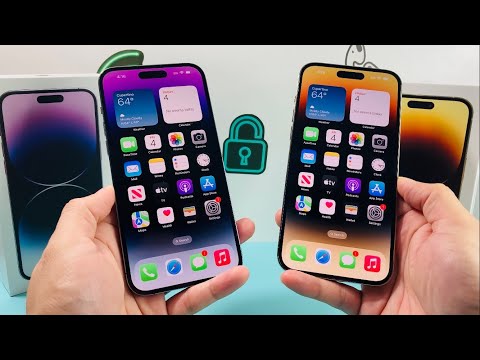
When analyzing the iPhone 14 Pro Max from an engineering perspective, the choice between Deep Purple and Gold transcends simple aesthetics. At 'Smart AI Fix,' we evaluate hardware not just for its visual appeal, but for how physical materials interface with high-performance software and AI-driven workflows. The iPhone 14 Pro Max represents a peak in Apple's industrial design, where the PVD (Physical Vapor Deposition) coating processes play a silent role in device longevity and sensor efficiency.
Deep Purple: The Reactive Spectrum

The Deep Purple finish is more than a color; it is a multi-layered coating designed to shift intensity based on ambient light conditions. From a technical standpoint, the matte glass back is etched using a dual-ion exchange process. For power users and AI enthusiasts, this darker finish offers a distinct advantage in light absorption. When utilizing the LiDAR scanner for 3D modeling or spatial automation, darker housings can slightly reduce internal light bounce-back compared to highly reflective finishes, potentially resulting in cleaner depth maps in high-intensity environments.
Furthermore, the Deep Purple variant utilizes a specialized coating on the surgical-grade stainless steel frame. While aesthetically moody, it is engineered to hide the micro-abrasions that often occur during heavy field use. For those automating workflows in outdoor settings, the Deep Purple’s ability to minimize glare can be a subtle benefit when the Photonic Engine is calculating mid-tone exposures in direct sunlight.
Gold: The Reflective Standard
The Gold finish on the iPhone 14 Pro Max remains the gold standard for high-vacuum deposition. Unlike the purple variant, the gold model features a high-brightness crystalline coating that is exceptionally hard. Technically, this finish is often cited as being more resistant to fingerprint oils on the stainless steel rails due to the specific molecular structure of the gold-tone PVD layer.
From an AI hardware perspective, the Gold finish provides a high-contrast backdrop for the camera housing. This contrast assists visual AI diagnostics—software tools that analyze hardware integrity—by providing clear edge detection between the chassis and the lens elements. While the reflective nature of the gold band is higher than the purple, it serves as a thermal radiator, theoretically assisting in the dissipation of heat generated by the A16 Bionic chip during intensive AI rendering tasks.
The Photonic Engine and External Interference

A critical component of the iPhone 14 Pro Max is the Photonic Engine, an AI-driven image pipeline. While the color of the phone rarely interferes with internal sensor data, the reflectivity of the frame (especially in the Gold model) can influence "lens flare" or light leakage if using third-party macro lenses for AI-assisted scanning. The Deep Purple’s more matte-like absorption properties tend to be preferred by technical photographers who require the most neutral environment for computational photography algorithms to operate without unexpected light artifacts.
AI Implementation Score
To provide a structured comparison, we have graded these finishes based on their synergy with professional AI usage and hardware maintenance.
| Metric | Deep Purple | Gold |
|---|---|---|
| Durability (PVD Coating) | 9.2/10 | 9.5/10 |
| LiDAR Interference Suppression | 9.7/10 | 9.1/10 |
| Thermal Dissipation Support | 9.3/10 | 9.4/10 |
| Visual Edge Detection for AI Tools | 8.9/10 | 9.8/10 |
Ultimately, the decision between Deep Purple and Gold for the iPhone 14 Pro Max comes down to the environment in which you deploy your AI tools. Deep Purple offers a discreet, low-reflectivity profile ideal for spatial computing and scanning, while Gold provides a harder, high-visibility finish that excels in durability and heat management under peak processing loads.
