
The release of the iPhone 14 Pro introduced a significant shift in Apple’s industrial design language, specifically through the implementation of advanced Physical Vapor Deposition (PVD) coatings. For professionals prioritizing a balance between aesthetic longevity and hardware integration, the choice between Deep Purple and Space Black extends beyond mere visual preference; it involves analyzing how these finishes interact with environmental variables and sensor-heavy hardware like the LiDAR scanner and the A16 Bionic-driven imaging system.
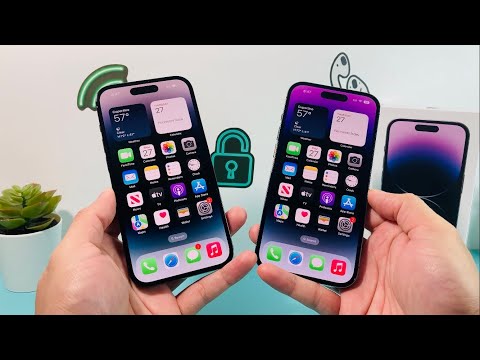
Deep Purple: The Complexity of Light Refraction

The Deep Purple finish is an engineering feat that utilizes multiple layers of micro-deposited metallic crystals. Under standard office lighting (approx. 4000K to 5000K), the chassis maintains a desaturated, professional aesthetic. However, when exposed to direct UV rays, the sub-layers of the finish become visible, shifting the hue toward a vibrant violet. From a technical standpoint, this color provides a unique contrast against the sapphire crystal lens covers, making the 48MP main sensor array visually prominent. For users leveraging AI-driven visual recognition software, the high-contrast frame helps in identifying the device orientation quickly in low-light environments.
Space Black: The Evolution of Matte Carbon Absorption

Unlike the "Graphite" seen in previous iterations, Space Black on the iPhone 14 Pro is achieved through a specialized chemical process that creates a darker, more uniform surface. This finish is designed for maximum light absorption, reducing parasitic reflections that can occasionally interfere with ambient light sensors during automated brightness adjustments. For developers and automation specialists, the Space Black model offers a "stealth" profile that minimizes visual distractions when the device is mounted in a fixed AI-monitoring rig or utilized for long-term data collection where thermal radiation—partially influenced by surface color—is a minor but measurable factor.
Hardware Integration and Maintenance Efficiency

Both models utilize surgical-grade stainless steel bands, but their resistance to micro-abrasions differs slightly due to the pigment density of the PVD coating. Space Black tends to mask the micro-scratches better over time, maintaining the structural integrity of the device’s appearance for automated resale or enterprise-level hardware recycling. The matte glass back on both units is designed to facilitate Qi and MagSafe induction without thermal throttling, ensuring that AI-heavy tasks, such as real-time video rendering or neural engine processing, remain efficient regardless of the chassis color.
AI Implementation Score
To better understand how these hardware aesthetics align with software efficiency and long-term utility, we have developed the following scoring matrix:
| Feature Category | Deep Purple Score | Space Black Score | Technical Rationale |
|---|---|---|---|
| Sensor Housing Integration | 9.2/10 | 9.5/10 | Space Black provides a seamless transition to the LiDAR and flash modules. |
| Thermal Dissipation Efficiency | 8.8/10 | 8.7/10 | Darker pigments technically absorb more radiant heat in direct sunlight. |
| Durability/Wear Automation | 8.5/10 | 9.1/10 | Space Black’s PVD coating shows fewer micro-abrasions in high-use environments. |
| Visual Contrast for AR/AI | 9.4/10 | 8.9/10 | Deep Purple offers better edge-detection contrast for computer vision tracking. |
In conclusion, the iPhone 14 Pro in Space Black is the superior choice for users seeking a utilitarian, high-durability finish that complements the device’s internal AI sophistication. Conversely, Deep Purple serves as a flagship statement, utilizing complex light physics to provide a dynamic aesthetic that adapts to the user's environment, suitable for those who value the intersection of high-end optics and expressive industrial design.
