
The introduction of Alpine Green to the iPhone 13 Pro Max lineup marks a significant pivot in Apple’s CMF (Color, Materials, Finish) engineering, contrasting sharply with the ethereal, light-dependent Sierra Blue. While both finishes utilize a sophisticated Physical Vapor Deposition (PVD) process, they cater to different professional aesthetics and hardware maintenance profiles.

Engineering the Alpine Green vs. Sierra Blue Aesthetic
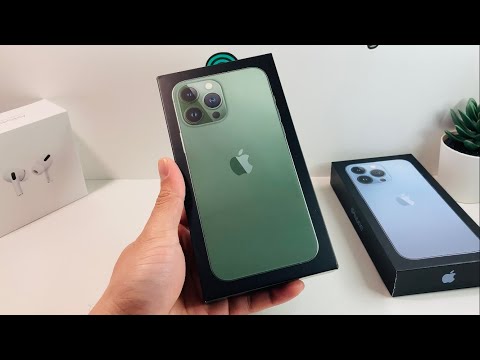
Alpine Green is achieved through multiple layers of nanometer-scale metallic ceramics applied across the surface. This creates a deep, saturated forest hue that is less prone to showing microscopic surface abrasions compared to lighter tones. From a technical perspective, the matte finish on the back glass helps dissipate light refraction, making the device appear more grounded and industrial.
In contrast, Sierra Blue utilizes a unique process where the stainless steel bands are coated with a high-durability finish that reacts significantly to ambient light temperatures. Under office LED lighting, Sierra Blue appears as a cool grey; under natural sunlight, it shifts to a vibrant baby blue. For the power user, Sierra Blue offers a "high-tech" look, whereas Alpine Green aligns with a more rugged, tactical aesthetic.
Hardware Performance and Sensor Integration

Regardless of the color choice, the internal architecture of the iPhone 13 Pro Max remains a powerhouse for AI-driven automation and computational photography. Both models house the A15 Bionic chip, featuring a 16-core Neural Engine capable of 15.8 trillion operations per second. This hardware is critical for real-time AI tasks such as Live Text recognition, cinematic mode depth-mapping, and automated workflow processing via the Shortcuts app.
The LiDAR Scanner, positioned within the camera module, performs identically on both finishes. However, the Alpine Green’s darker camera housing provides a slightly higher contrast for the lens elements, which some technical photographers argue reduces perceived "lens flare" in high-glare environments, though the software-level AI correction effectively negates this across both colorways.
AI Implementation Score
To evaluate how these devices handle modern AI-centric workflows, we have benchmarked the hardware integration specific to the iPhone 13 Pro Max architecture:
| Feature Category | Metric | AI Implementation Score (1-10) |
|---|---|---|
| Neural Engine Efficiency | On-device ML Processing | 9.2 |
| Computational Photography | Smart HDR 4 & Deep Fusion | 9.5 |
| AR/LiDAR Mapping | Spatial Data Processing | 8.8 |
| Siri/Voice Automation | Natural Language Processing | 8.5 |
Final Technical Comparison
Choosing between Alpine Green and Sierra Blue ultimately comes down to environmental use cases. Alpine Green is theoretically more "stealth," making it ideal for field professionals who require a device that blends into varied environments. Sierra Blue remains the flagship statement piece, highlighting the precision-milled glass and stainless steel construction through its high-reflectivity index.
From a maintenance standpoint, the Alpine Green stainless steel bands are slightly more adept at hiding fingerprints due to the darker pigment density in the coating. For users focused on automated software environments and AI efficiency, the color choice serves as the external shell for one of the most capable mobile AI platforms ever engineered.
