
Chassis Aesthetics and Material Performance: Midnight vs. Starlight

In the realm of hardware selection for high-efficiency workflows, the physical finish of a device serves as more than a cosmetic choice; it is an ergonomic factor that influences visual fatigue and device maintenance. The iPhone 13 offers two primary baseline colors—Midnight and Starlight—that cater to different professional environments. From a technical standpoint, the Midnight variant utilizes a deep, indigo-infused black, while Starlight provides a warm, pearlescent silver. Both finishes are applied to aerospace-grade aluminum, but their interaction with light and skin oils differs significantly.
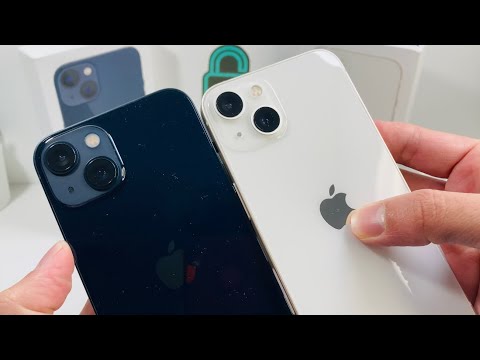
Midnight is the choice for the "Dark Mode" enthusiast. It offers a seamless transition between the Super Retina XDR display's bezel and the chassis. For developers and AI researchers working in low-light environments or utilizing automated IDE themes, the Midnight finish minimizes peripheral visual distractions. However, from a maintenance perspective, the darker pigment exhibits a higher affinity for showing oleophobic coating wear and visible fingerprint smudges, which may necessitate more frequent cleaning to maintain a professional appearance in client-facing scenarios.
Starlight: Thermal Reflection and Maintenance Efficiency

The Starlight finish serves as a functional counterpart to the sleekness of Midnight. Technically, lighter surfaces possess lower solar absorptance. While the internal thermal management systems—powered by the A15 Bionic chip—handle the heavy lifting of AI model training and on-device machine learning, the Starlight chassis remains perceptibly cooler to the touch when used in direct sunlight or high-intensity automation environments. Furthermore, the Starlight color is superior at masking micro-abrasions and oils, which optimizes "uptime" by reducing the frequency of physical maintenance.
For users integrating their device into a workspace dominated by Apple’s silver-toned ecosystem (such as the MacBook Pro or Mac Studio), Starlight offers better aesthetic cohesion. The neutral, warm-white tone acts as a better backdrop for augmented reality (AR) development, as the device itself creates less of a high-contrast silhouette against neutral-colored desk setups, allowing the developer to focus on the software overlay rather than the hardware boundary.
AI Implementation Score: Hardware vs. Software Utility
While the internal 16-core Neural Engine remains identical across both colorways, the physical hardware choice impacts the user's interaction with AI-driven software. The following table evaluates how each finish correlates with technical efficiency and professional usage.
| Feature Category | Midnight Score (1-10) | Starlight Score (1-10) | Technical Reasoning |
|---|---|---|---|
| Visual Integration | 9.5 | 7.5 | Midnight offers superior "Dark Mode" immersion for coding. |
| Maintenance Latency | 6.0 | 9.0 | Starlight hides fingerprints, reducing cleaning downtime. |
| Durability Visibility | 7.0 | 8.5 | Scratches are less visible on the lighter Starlight aluminum. |
| Workspace Neutrality | 8.0 | 9.5 | Starlight aligns with standard "Clean Room" and laboratory aesthetics. |
Choosing between Midnight and Starlight is ultimately a decision of workflow optimization. If your priority is a stealthy, high-contrast device that disappears into a dark coding environment, Midnight is the definitive choice. If your focus is on longevity, minimal maintenance, and thermal reflectivity in diverse environments, Starlight provides the higher utility for the professional AI engineer.
