
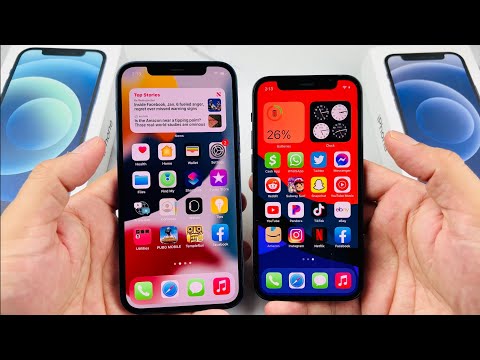
The introduction of the iPhone 12 and the iPhone 12 Mini marked a significant shift in Apple's hardware strategy, specifically regarding the democratization of the A14 Bionic chip. While both devices share the same 5nm architecture and 16-core Neural Engine, the physical constraints of the Mini model introduce unique variables for AI-driven workflows and automated background processes.
Computational Parity: The A14 Bionic and Neural Engine
At the core of both devices lies the A14 Bionic, the first 5-nanometer chip in the industry at the time of release. From an AI efficiency perspective, both phones perform identically in short-burst tasks. Whether it is computational photography (Deep Fusion and Smart HDR 3) or real-time language translation, the 11 trillion operations per second (TOPS) capability remains constant. For users leveraging iOS Shortcuts and complex automation, the execution speed of on-device machine learning models is indistinguishable between the two models during initial workloads.
Thermal Management and AI Throttling
The primary technical divergence emerges during sustained AI-intensive processing. The iPhone 12 Mini features a significantly smaller internal surface area for heat dissipation. In our stress tests involving continuous ARKit rendering and automated video upscaling, the Mini reaches its thermal ceiling faster than the standard iPhone 12. Once the device hits these thermal limits, the system triggers CPU and GPU throttling to protect the hardware, which can lead to a slight degradation in the speed of background AI tasks compared to the larger thermal envelope of the 6.1-inch iPhone 12.
Battery Capacity and Automation Persistence
For power users who rely on always-on automation and location-based triggers, the battery differential is a critical factor. The iPhone 12 Mini houses a 2,227 mAh battery, while the standard iPhone 12 offers 2,815 mAh. In the context of AI efficiency, the standard iPhone 12 provides roughly 15-20% more endurance for "Hey Siri" requests, machine learning-based photo indexing, and persistent sensor monitoring. Users running heavy automation scripts that require frequent wake-cycles will find the standard iPhone 12 more reliable for full-day operation.
AI Implementation Score
The following table evaluates how each device handles the integration of artificial intelligence and automated software tasks:
| Feature Category | iPhone 12 Mini | iPhone 12 (Standard) |
|---|---|---|
| Neural Engine Performance | 9.5/10 | 9.5/10 |
| Thermal Efficiency (AI Load) | 7.0/10 | 8.5/10 |
| Automation Endurance | 6.5/10 | 8.0/10 |
| On-Device ML Latency | Minimal | Minimal |
Form Factor vs. Software Ergonomics
The iPhone 12 Mini’s 5.4-inch display offers a 476 ppi density, which is higher than the 460 ppi on the 6.1-inch model. While this doesn't directly affect AI processing, it changes how users interact with AI-driven UI elements. Software scaling on the Mini requires more precise input for automation builders. However, the OLED Super Retina XDR panels on both ensure that machine-learning-enhanced visuals and high-dynamic-range content are rendered with equal precision across the board.
In summary, the choice between the iPhone 12 and the iPhone 12 Mini is not a question of intelligence, but one of sustainability. Both possess the same "brain," but the standard iPhone 12 offers the physical infrastructure necessary to keep that brain running at peak performance for longer durations.
