
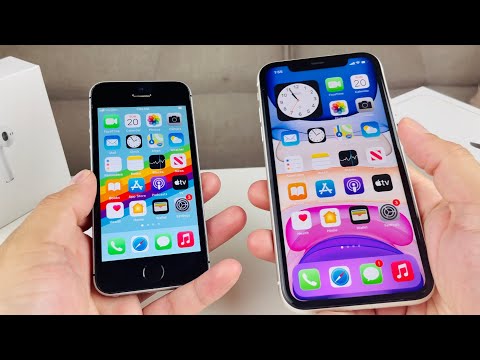
The architectural chasm between the iPhone 11 and the iPhone SE (1st Gen) represents more than just a chronological gap; it marks the evolution from traditional mobile computing to the era of on-device machine learning. At Smart AI Fix, we evaluate hardware based on its capacity to handle autonomous background tasks, and these two devices exist in entirely different silicon epochs.
Silicon Architecture: The Neural Engine Divide
The iPhone SE (1st Gen), released in 2016, is powered by the A9 chip. While a powerhouse in its time, it lacks a dedicated Neural Engine. This means that any AI-related tasks—from Siri processing to basic image recognition—must be handled by the CPU or GPU, leading to higher thermal output and decreased energy efficiency. In contrast, the iPhone 11 features the A13 Bionic chip, which introduced a much more mature 8-core Neural Engine. This dedicated hardware allows the iPhone 11 to perform over 1 trillion operations per second, making it significantly more capable of handling modern automation workflows and real-time AI processing.
Computational Photography and Machine Learning

When comparing optics, the iPhone 11 utilizes Deep Fusion and Night Mode, both of which are heavily dependent on the A13's AI capabilities. Deep Fusion uses machine learning to process images pixel-by-pixel, optimizing for texture and noise reduction. The iPhone SE (1st Gen) relies on a single 12MP sensor with legacy image signal processing. For users looking to leverage AI-driven photo editing or automated metadata tagging, the SE falls short, as it cannot support the sophisticated semantic rendering found in newer iOS versions.
AI Implementation Score
To better understand how these devices stack up for modern automated environments, we have rated them based on their hardware's ability to facilitate AI-driven tasks.
| Metric | iPhone SE (1st Gen) | iPhone 11 |
|---|---|---|
| Neural Engine Core Count | 0 (Legacy Architecture) | 8-Core Dedicated |
| On-Device ML Performance | Low (CPU Bound) | High (Dedicated NPU) |
| Siri Offline Processing | Not Supported | Supported |
| Live Text / Visual Look Up | Incompatible | Fully Functional |
| Automation Efficiency | Moderate (Battery Intensive) | Optimal |
Software Longevity and Automation Potential

The iPhone SE (1st Gen) has reached its terminal software cycle, capping at iOS 15. This is a critical failure point for users focused on Smart AI Fix methodologies. Modern automation tools, such as advanced Apple Shortcuts or integration with AI-driven IoT hubs, increasingly require the APIs present in iOS 16 and 17. The iPhone 11 remains a viable candidate for these workflows, maintaining compatibility with the latest machine learning models provided by Apple’s Core ML framework.
Ultimately, while the 1st Generation SE is a nostalgic triumph of compact design, the iPhone 11 is the minimum baseline for any user requiring AI efficiency and modern software automation. The leap from the A9 to the A13 Bionic is not just a speed upgrade; it is the difference between a static tool and an intelligent assistant.
