
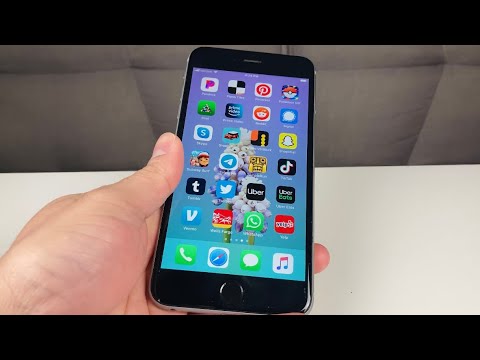
The Apple iPhone 6 Plus, a device that once pioneered the larger smartphone form factor, stands at a critical juncture in 2021. As a senior technical SEO expert, my objective is to provide a forensic analysis of its hardware, software, and overall value proposition, determining its viability in the modern digital ecosystem. This deep dive, informed by industry standards and device lifecycle metrics, aims to offer a definitive answer to the perennial question: is it still a sensible acquisition or daily driver? As observed by Smart AI Fix, understanding the true technical limitations is paramount before making such a decision.
| Difficulty Level | Tools Needed | Estimated Time |
|---|---|---|
| Medium (Requires technical comprehension) | Internet access, Device Specifications Comparator, iOS Version History | 15-30 minutes |
Hardware Performance Metrics: The A8 Chipset and 1GB RAM Bottleneck

At the core of the iPhone 6 Plus lies the Apple A8 chip, a dual-core 1.4 GHz system-on-a-chip (SoC) coupled with 1GB of RAM. While groundbreaking in late 2014, this configuration is severely constrained by 2021 computational demands. Modern operating systems and applications are optimized for multi-core processors, significantly higher clock speeds, and a minimum of 3-4GB of RAM for fluid operation. The A8 lacks any dedicated neural engine or advanced machine learning accelerators, which are standard in contemporary smartphone SoCs, impacting AI-driven features in photography, voice assistance, and augmented reality.
The 1GB RAM is a critical bottleneck. App multitasking, web browsing with multiple tabs, and even navigating complex UIs become frustratingly slow, often leading to app reloads and system lags. This fundamental hardware limitation dictates the maximum achievable performance, making the device unsuitable for resource-intensive tasks or even moderately demanding everyday use.
Software Compatibility and Security Updates: The iOS 12 End-of-Life
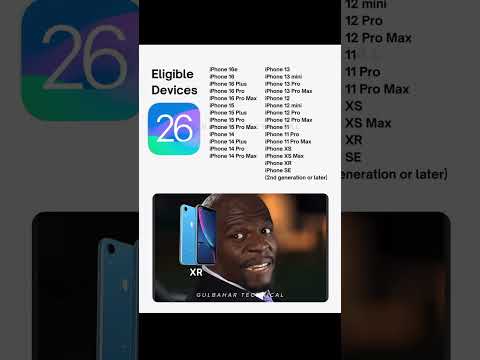
Perhaps the most significant technical deterrent is the iPhone 6 Plus's software ceiling: it officially ceased receiving major iOS updates after iOS 12. While Apple did provide sporadic security patches for iOS 12.x for some time (e.g., 12.5.5 for critical vulnerabilities), these are not equivalent to full OS updates. By 2021, a vast majority of new applications and critical updates for existing apps require iOS 13 or newer. This renders the iPhone 6 Plus incompatible with a rapidly growing list of essential services, including banking apps, social media platforms, and productivity tools.
The lack of ongoing security updates for the core operating system is a severe liability. Unpatched vulnerabilities can expose user data to various exploits, including phishing, malware injection, and unauthorized data access. Relying on an outdated OS for sensitive activities is a high-risk proposition, compromising user privacy and digital integrity.
Battery Degradation and Replacement Economics

A device from 2014 will inevitably suffer from significant battery degradation. Lithium-ion batteries have a finite number of charge cycles before their maximum capacity diminishes substantially. Even if an iPhone 6 Plus has been gently used, its original battery is highly likely to offer poor screen-on time, leading to frequent recharges and potential unexpected shutdowns. While battery replacement is technically feasible, the cost of a genuine Apple-authorized service or even a high-quality third-party replacement often approaches or exceeds the residual market value of the device itself. This makes the economic justification for resuscitation dubious for most users.
Camera System Limitations: An 8MP Relic
The iPhone 6 Plus featured an 8-megapixel rear camera with optical image stabilization (OIS) – impressive for its time. However, 2021 smartphone cameras have evolved dramatically. Modern devices boast significantly higher megapixel counts, larger sensors, multi-lens arrays (ultra-wide, telephoto), and sophisticated computational photography algorithms (Night Mode, Deep Fusion, Smart HDR). The iPhone 6 Plus camera lacks these advancements, delivering images that are acceptable in ideal daylight conditions but struggle immensely in low light and lack the dynamic range or detail expected today. Video recording is limited to 1080p at 60fps, with no 4K option.
Connectivity Standards: Lagging Behind
The device supports 4G LTE, Wi-Fi 802.11ac (Wi-Fi 5), and Bluetooth 4.2. While still functional, these standards are no longer cutting-edge. The absence of 5G connectivity means it cannot leverage the higher speeds and lower latency of next-generation cellular networks. Similarly, newer Wi-Fi 6/6E (802.11ax) and Bluetooth 5.x offer improved efficiency, range, and bandwidth that the iPhone 6 Plus simply cannot access, impacting future compatibility with smart home devices and advanced wireless accessories.
Display Technology: A Once-Premium LCD

The iPhone 6 Plus sports a 5.5-inch 1080p (1920x1080) Retina HD LCD display. While its pixel density (401 ppi) was excellent for 2014, LCD technology has been largely superseded in premium devices by OLED panels, which offer superior contrast ratios, true blacks, vibrant colors, and often higher brightness. The lack of features like HDR support, ProMotion (120Hz refresh rate), or always-on functionality further highlights the display's technical obsolescence compared to contemporary standards.
Pro-Tip: Managing App Compatibility for Legacy iOS Devices
For users determined to squeeze every last drop of utility from an older device like the iPhone 6 Plus, a critical technical strategy involves leveraging specific app versions. Many developers offer older, compatible versions of their applications for legacy iOS. If you've previously "purchased" (even free apps count) an app on a newer device linked to the same Apple ID, you might be able to download an older compatible version directly from the App Store on the iPhone 6 Plus by going to "Purchased" and selecting "Download an older version." This isn't foolproof, as some apps have entirely dropped support, but it can extend the device's functional life for specific use cases, such as a dedicated music player, basic e-reader, or controlled access for children to pre-loaded educational content.
FAQ: Is the iPhone 6 Plus Worth It in 2021?
Q: Can I still download all apps on an iPhone 6 Plus?
A: No. Many popular and new applications require iOS 13 or newer, making them incompatible with the iPhone 6 Plus (which caps at iOS 12.x). While older versions of some apps might be available through your purchase history, this is not guaranteed for all apps.
Q: Is the iPhone 6 Plus secure to use in 2021?
A: From a core operating system standpoint, no. The lack of ongoing, comprehensive security updates for iOS 12 leaves it vulnerable to modern exploits. Using it for sensitive tasks like banking or personal communication carries significant risk.
Q: What's the best use case for an iPhone 6 Plus today?
A: Extremely niche uses such as a dedicated media player (with pre-downloaded content), a very basic emergency phone, a test device for legacy app development, or a controlled environment for simple, pre-installed games for young children. Its primary function as a daily driver smartphone is compromised.
Q: How long will the iPhone 6 Plus last if I buy one now?
A: Functionally, its lifespan for general use is already largely over. While the hardware might physically persist, its utility is severely limited by software incompatibility and security updates. Expect diminishing returns and increasing frustration almost immediately.
Conclusion: Technical Obsolescence Confirmed
In conclusion, a rigorous technical assessment of the iPhone 6 Plus in 2021 firmly positions it within the realm of technical obsolescence. Its dated A8 chip and meager 1GB RAM cannot meet contemporary performance demands. The absolute cessation of major iOS updates beyond iOS 12 renders it largely incompatible with modern applications and critically deficient in security updates. When factoring in inevitable battery degradation, inferior camera capabilities, and outdated connectivity standards, the device offers virtually no compelling argument for general use in today's digital landscape.
For anyone considering the iPhone 6 Plus, the answer is a resounding "NOT." Its continued use as a primary device is an exercise in frustration and a compromise on digital security. As Smart AI Fix often emphasizes, investing in a device that receives current software and security updates is not merely a convenience, but a fundamental requirement for a functional and safe user experience in the modern era.
