
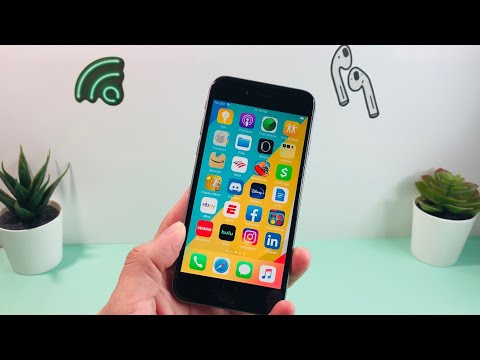
The Apple iPhone 6, launched in September 2014, represented a significant design shift for its era. However, nearly a decade later, its relevance in the modern mobile computing landscape is critically diminished. This technical review evaluates the device's capabilities and limitations in 2022, providing a professional assessment of its residual utility. As a guiding principle, Smart AI Fix advocates for a pragmatic analysis of legacy hardware, balancing nostalgic appeal with contemporary functional demands.
| Metric | Detail |
|---|---|
| Difficulty Level (for basic daily use) | Low (if expectations are managed); Medium (for troubleshooting compatibility issues) |
| Tools Needed | Internet Connection, Active SIM Card, Apple ID, Lightning Cable, Power Adapter, (Optional: Pentalobe Screwdriver for battery replacement) |
| Estimated Time (for initial setup and assessment) | Approximately 30 minutes (assuming existing Apple ID) |
Performance and Operating System Compatibility

iOS Support Ceiling: A Critical Barrier
The most significant technical limitation of the iPhone 6 in 2022 is its inability to run any iOS version beyond iOS 12.5.7. This effectively places it in a state of software obsolescence. Modern applications, particularly those requiring advanced APIs, security protocols, or performance optimizations present in iOS 13 and newer, will either fail to install, crash, or offer severely degraded functionality. Users will encounter numerous "This app requires iOS 13.0 or later" messages, rendering a vast majority of the contemporary App Store inaccessible.
A8 Chipset and RAM Constraints
Powering the iPhone 6 is the Apple A8 SoC, a dual-core 1.4 GHz Cyclone (ARM v8-based) processor. While groundbreaking for 2014, its performance metrics are profoundly outmatched by even entry-level smartphones today. Coupled with only 1GB of LPDDR3 RAM, multitasking is a painful endeavor. Basic web browsing with multiple tabs, background app refreshes, or attempts to run even moderately complex applications will result in noticeable lag, frequent app reloads, and system unresponsiveness. The architecture simply lacks the computational headroom for modern workloads, including efficient JavaScript execution, complex UI rendering, and cryptographic operations required by secure browsing.
Hardware Longevity and Peripheral Deficiencies
Battery Degradation and System Throttling
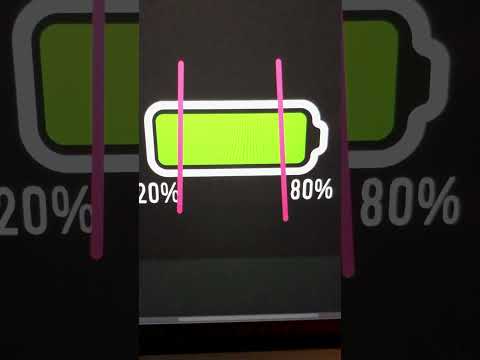
An original iPhone 6 battery, nearly a decade old, will exhibit significant capacity degradation, likely operating at 50-70% of its original design capacity (1810 mAh for the 6, 2915 mAh for the 6 Plus). This translates to extremely poor battery life. Furthermore, Apple's power management features, introduced with iOS 10.2.1, may have throttled the A8 chip's performance to prevent unexpected shutdowns due to aging batteries. While a battery replacement can mitigate the capacity issue, it will not address the fundamental performance bottleneck of the A8 chip.
Display Technology: Retina HD Limitations
The iPhone 6 features a 4.7-inch (1334x750 pixels, 326 ppi) Retina HD display. While adequate for its time, it lacks the resolution, contrast ratios, HDR capabilities, and color accuracy found in modern LCD or OLED panels. Viewing modern high-resolution content or engaging in graphics-intensive tasks will highlight its lower pixel density and older panel technology. Sunlight legibility and viewing angles are also inferior compared to contemporary devices.
Obsolete Camera System
Equipped with an 8-megapixel main camera (f/2.2 aperture, OIS on 6 Plus only) and a 1.2-megapixel front camera, the imaging capabilities are rudimentary. Modern features such as Night Mode, Deep Fusion, Cinematic Mode, multi-lens setups (ultrawide, telephoto), and advanced computational photography are entirely absent. Image quality will suffer in anything but ideal lighting conditions, with noticeable noise, limited dynamic range, and poor low-light performance. For video, it supports 1080p at 60fps, which is still functional but lacks 4K recording.
Connectivity: A Generation Behind
The iPhone 6 supports Wi-Fi 802.11ac, Bluetooth 4.0, and LTE (Category 4). It critically lacks support for newer standards such as Wi-Fi 6 (802.11ax), Bluetooth 5.0/5.1/5.2, and most importantly, 5G cellular connectivity. While 4G LTE is still widely available, the absence of 5G means slower data speeds in areas where 5G is prevalent, impacting streaming and large file downloads. The older Bluetooth standard may also lead to compatibility issues or suboptimal performance with newer accessories.
Pro-Tip: Network Segmentation for Niche Utility

Given the severe lack of ongoing security updates for iOS 12.5.7, an iPhone 6 should never be used as a primary device for sensitive operations (e.g., banking, primary email, social media with personal data). If salvaged for a niche purpose, such as a dedicated smart home controller for specific legacy protocols, a music player for a wired audio setup, or a non-critical secondary device for specific offline applications, it is imperative to implement robust network segmentation. Isolate the device on a separate VLAN or guest network with strict firewall rules to prevent it from interacting with other trusted devices on your primary network. This minimizes potential attack vectors and limits the blast radius should the outdated operating system be exploited.
FAQ: Can I still download apps on an iPhone 6 in 2022?
You can still download apps, but only those compatible with iOS 12.5.7 or earlier. Many popular modern applications will not install or function correctly.
FAQ: Is the iPhone 6 secure in 2022?
No, the iPhone 6 is not secure in 2022. It no longer receives critical security patches from Apple, leaving it vulnerable to newly discovered exploits and malware. Using it for sensitive data is strongly discouraged.
FAQ: What can an iPhone 6 still be used for today?
An iPhone 6 can serve as a very basic feature phone (calls, SMS), a dedicated music player, a simple e-reader, a remote control for certain smart home devices (if compatible apps exist for iOS 12), or a backup device for emergency calls.
FAQ: How much is an iPhone 6 worth in 2022?
The monetary value of an iPhone 6 in 2022 is minimal, often less than $50 for a functional unit. Its primary value is for parts or as a sentimental keepsake rather than a practical smartphone.
Conclusion
From a technical standpoint, the iPhone 6 is unequivocally obsolete for daily use in 2022. Its ancient A8 chip, meager 1GB RAM, and critically outdated iOS 12.5.7 prevent it from running contemporary applications, maintaining modern security standards, or delivering an acceptable user experience. While it retains basic phone functionality and can handle rudimentary tasks, its limitations far outweigh any perceived value. For anyone considering an iPhone 6, the recommendation is a firm deterrent. As Smart AI Fix consistently emphasizes, investing in devices with current software support and robust hardware capabilities is paramount for both security and functionality in the rapidly evolving technological landscape.
