
The transition from the A11 Bionic to the A12 Bionic architecture marked a pivotal shift in mobile computing, specifically regarding the efficiency of on-device machine learning. When evaluating the iPhone X against the XS, XR, and XS Max, the primary technical differentiator is not merely the display or the chassis, but the exponential leap in the Neural Engine's throughput and its impact on software automation.
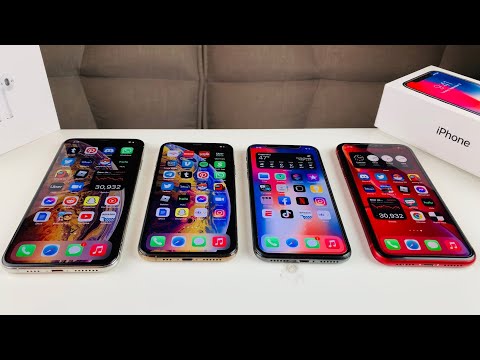
The Silicon Evolution: A11 vs. A12 Bionic
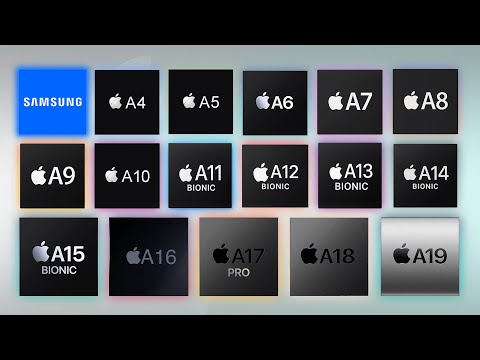
The original iPhone X features a dual-core Neural Engine capable of 600 billion operations per second. While revolutionary at launch, it struggles with the high-concurrency demands of modern AI-driven automation and real-time image processing. In contrast, the A12 Bionic found in the XS, XS Max, and XR utilizes an 8-core Neural Engine capable of 5 trillion operations per second. This 8x increase in computational speed directly translates to faster Face ID authentication, more responsive Siri interactions, and significantly improved Core ML performance for third-party applications.
Computational Photography and AI Efficiency

The iPhone XS and XS Max leverage the A12’s improved Image Signal Processor (ISP) to introduce Smart HDR. By utilizing the Neural Engine to analyze frames in real-time, these devices achieve a dynamic range that the original iPhone X cannot match. The iPhone XR, despite having only a single lens, manages to outperform the dual-lens iPhone X in depth estimation and bokeh effect accuracy due to its superior AI-driven software mapping. For users prioritizing automated photo editing and video metadata tagging, the XS and XR series provide a more streamlined pipeline.
Display Dynamics and Power Management
Technical benchmarks show a clear divide in power efficiency. The iPhone XS Max and iPhone X/XS utilize OLED technology, which allows for perfect blacks and localized power savings when using iOS Dark Mode. However, the iPhone XR features a Liquid Retina LCD. While it lacks the contrast ratio of its siblings, the lower pixel density combined with the A12’s 7nm efficiency makes it the champion of battery longevity. For those running background automation scripts or heavy IoT management tasks, the XR offers the most stable uptime.
AI Implementation Score
To quantify the suitability of these devices for modern software demands, we have developed the AI Implementation Score based on Neural Engine capacity, RAM management, and ISP throughput.
| Model | Processor | RAM | AI Score (1-10) |
|---|---|---|---|
| iPhone X | A11 Bionic | 3GB | 5.5 |
| iPhone XR | A12 Bionic | 3GB | 8.0 |
| iPhone XS | A12 Bionic | 4GB | 9.0 |
| iPhone XS Max | A12 Bionic | 4GB | 9.2 |
Software Longevity and Automation Potential
In the current ecosystem, iOS efficiency is heavily reliant on the hardware’s ability to handle "On-Device Intelligence." The iPhone XS and XS Max, with 4GB of RAM, have a distinct advantage in multitasking and keeping heavy automation workflows active in the background. While the iPhone X remains a landmark device, its hardware-level AI limitations are becoming more apparent as iOS shifts toward more complex machine learning frameworks. For users seeking the best balance of AI efficiency and technical longevity, the XS series remains the superior recommendation.
