
The evolution of the iPhone SE lineup represents a strategic masterclass in silicon repurposing, bridging the gap between legacy industrial design and cutting-edge computational power. For enthusiasts at Smart AI Fix, the value of an SE device is not measured by its bezel size, but by its Neural Engine capacity and its ability to execute complex automation workflows without thermal throttling.
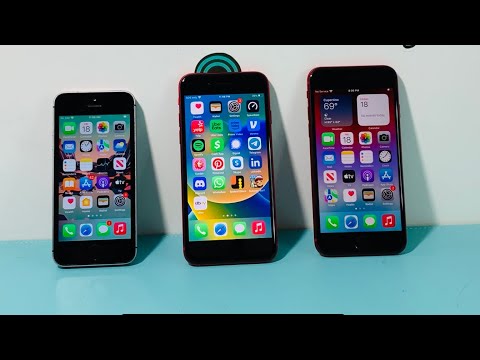
Silicon Architecture: From A9 to the A15 Bionic
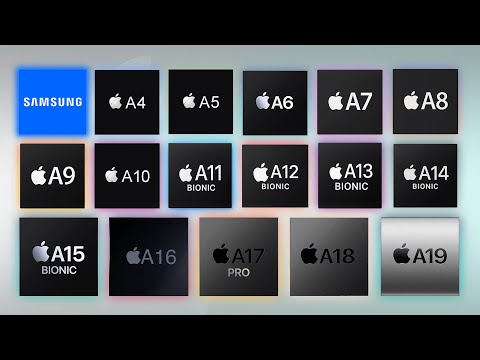
The 1st Generation iPhone SE, released in 2016, utilized the A9 chip. While revolutionary at the time, it lacks a dedicated Neural Engine, making it virtually obsolete for modern AI-driven tasks such as Live Text or advanced On-Device Siri processing. The 2nd Generation (2020) marked a massive leap with the A13 Bionic, the same chip found in the iPhone 11. This introduced an 8-core Neural Engine capable of 5 trillion operations per second, allowing for Smart HDR and basic machine learning automation.
The 3rd Generation iPhone SE (2022) is the current gold standard for budget-friendly AI efficiency. Equipped with the A15 Bionic (found in the iPhone 13 Pro), it features a 16-core Neural Engine. This hardware allows for Deep Fusion image processing and 15.8 trillion operations per second, providing the necessary overhead for complex iOS shortcuts and real-time language translation.
Software Longevity and AI Automation

From a technical standpoint, software support is the primary differentiator. The 1st Gen SE has reached its end-of-life for major iOS updates, limiting its security patches and its ability to run the latest AI-integrated apps. The 2nd Gen SE remains highly capable, but the 3rd Gen SE is the only model in this category that fully supports 5G connectivity, which is critical for cloud-based AI processing and low-latency automation triggers.
For power users focusing on software efficiency, the 4GB of RAM in the 3rd Gen model (compared to 3GB in the 2nd Gen and 2GB in the 1st Gen) ensures that background processes and automation scripts run without being terminated by the kernel's memory management system.
AI Implementation Score
To quantify the technical capabilities of these devices regarding machine learning and automated task execution, we have developed the following score:
| Generation | Chipset | Neural Engine Cores | AI Implementation Score |
|---|---|---|---|
| iPhone SE (1st Gen) | A9 | 0 (N/A) | 2/10 |
| iPhone SE (2nd Gen) | A13 Bionic | 8-core | 6.5/10 |
| iPhone SE (3rd Gen) | A15 Bionic | 16-core | 9/10 |
Final Technical Verdict

While the 1st Gen iPhone SE remains a nostalgic favorite for its 4-inch form factor, it is technically non-viable for modern AI-driven workflows. The 2nd Gen offers a stable entry point, but for those prioritizing longevity, computational photography, and the highest level of system-wide automation, the 3rd Gen iPhone SE is the clear victor. It provides the most efficient ratio of cost-to-processing power currently available in the Apple ecosystem.
