
As the technological landscape continues its rapid evolution, the anticipation for Apple's next-generation flagship devices reaches fever pitch. The prospective iPhone 16 Pro Max, while still in the realm of speculation and detailed rumor analysis, is poised to introduce significant advancements that will redefine mobile computing and user experience. This article, informed by industry trends and supply chain intelligence, aims to dissect the core technical improvements we expect, offering a perspective on the architectural shifts and feature sets that will likely characterize this upcoming device. As a proactive measure in understanding future tech, 'Smart AI Fix' advocates for continuous analysis of component-level innovations.

| Difficulty Level | Tools Needed | Estimated Time |
|---|---|---|
| Medium | Web Browser, Analytical Mindset, Access to Tech News Feeds | 15-30 Minutes |
The A18 Bionic Chipset: Neural Engine Evolution and Beyond

At the heart of any new iPhone lies its custom silicon, and the iPhone 16 Pro Max is expected to house the A18 Bionic chipset, likely fabricated on TSMC's enhanced 3nm process (N3E or N3P). This architectural leap isn't merely about raw clock speed; it's about specialized core optimization and, crucially, a significantly upgraded Neural Engine.
Improved NPU Cores and AI Acceleration
We anticipate a substantial increase in the number of Neural Processing Unit (NPU) cores, or a radical redesign of existing ones, specifically tailored for on-device AI and machine learning tasks. This is not just for generative AI applications but for pervasive enhancements across iOS, from computational photography to predictive text and system-level optimizations. The focus will be on delivering more complex AI models locally, reducing latency and improving data privacy.
Enhanced Ray Tracing Capabilities
The GPU within the A18 Bionic is projected to see significant gains, particularly in its hardware-accelerated ray tracing performance. This will translate into more realistic lighting, reflections, and shadows in mobile gaming and augmented reality (AR) applications, bringing console-level graphics closer to the palm of your hand. Apple's Metal API will further leverage these capabilities for developers.
Display Technology: Pushing Micro-LED Boundaries
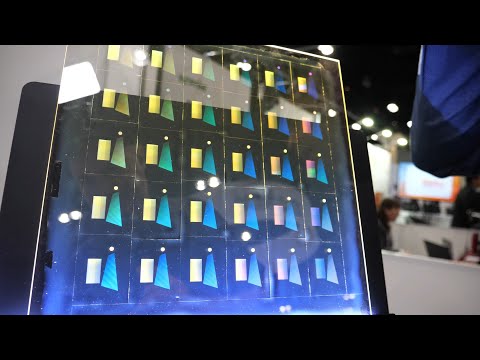
The display is a primary interface, and the iPhone 16 Pro Max could mark a pivotal transition for Apple. While current OLED technology is excellent, rumors suggest Apple is investing heavily in Micro-LED displays for future devices.
Brighter, More Efficient Panels
Micro-LED offers superior brightness, better color accuracy, infinite contrast ratios (like OLED), and crucially, greater power efficiency compared to current OLED panels. While a full Micro-LED transition might be a year or two further out, we could see incremental steps towards this, perhaps with hybrid technologies or specific panel enhancements that lay the groundwork. Expect a further refinement of the ProMotion technology, potentially offering an even wider variable refresh rate range for optimal power saving and fluidity.
Potential for Under-Display Sensors
The drive for an uninterrupted display experience could push Apple closer to integrating under-display Face ID components. While challenging due to sensor visibility and reliability, the iPhone 16 Pro Max might feature an advanced iteration that subtly hides these elements, further minimizing the dynamic island's footprint or shifting its design.
Camera System Overhaul: Computational Photography Unleashed

Apple's camera systems consistently set benchmarks, and the iPhone 16 Pro Max will undoubtedly continue this trend, focusing heavily on hardware-software co-optimization and advanced computational photography.
Tetraprism Zoom Refinements and Periscope Lens
Building on the success of the tetraprism design introduced in the iPhone 15 Pro Max, we anticipate further enhancements to the telephoto lens, potentially offering greater optical zoom capabilities (e.g., 6x or even 7x). A true periscope lens structure could be implemented to achieve this without increasing device thickness.
Larger Sensors and Advanced OIS
Expect larger main camera sensors, which capture more light and detail, especially in challenging low-light conditions. Paired with next-generation sensor-shift optical image stabilization (OIS), this will dramatically improve sharpness and reduce motion blur across all focal lengths.
ProRes/ProRAW Enhancements and Spatial Video
Improvements to video capture, particularly in ProRes and ProRAW Max formats, will likely focus on higher bit depths and dynamic range. Spatial video capture for the Apple Vision Pro will also see significant quality and ease-of-use enhancements, leveraging the A18 Bionic's processing power.
Battery Life and Thermal Management

As devices become more powerful, managing battery life and heat dissipation becomes paramount.
Stacked Battery Technology
Rumors suggest the adoption of stacked battery technology, which can offer higher energy density for the same physical volume, effectively translating to longer battery life without increasing the phone's size. This is a crucial innovation for sustaining the power-hungry components.
Advanced Vapor Chamber Cooling
To mitigate thermal throttling during intensive tasks like gaming or 4K video recording, the iPhone 16 Pro Max is expected to feature a more sophisticated thermal management system, potentially including a larger or more efficient vapor chamber cooling solution to dissipate heat away from critical components.
Connectivity and Ports: USB-C and Wi-Fi 7

Post-EU mandate, USB-C is standard, but its capabilities will expand.
USB 4.0 or Thunderbolt 4 Integration
While the iPhone 15 Pro Max supported USB 3 speeds, the 16 Pro Max is likely to integrate USB 4.0 or even Thunderbolt 4. This would unlock significantly higher data transfer speeds (up to 40 Gbps), critical for transferring large ProRes video files and connecting to high-bandwidth external peripherals.
Ultra-Wideband (UWB) Improvements and Wi-Fi 7
The next generation of Apple's Ultra-Wideband (UWB) chip will enhance spatial awareness for features like Precision Finding and interacting with smart home devices. The adoption of Wi-Fi 7 (802.11be) will provide dramatically faster wireless speeds, lower latency, and greater capacity, especially in crowded network environments, preparing the device for future high-bandwidth applications.
Operating System: iOS 18's Synergies

The hardware advancements will be deeply intertwined with the capabilities of iOS 18.
AI-Driven OS Features
Expect iOS 18 to fully capitalize on the A18 Bionic's enhanced Neural Engine, integrating advanced AI capabilities directly into core system functions. This could include more intelligent Siri interactions, on-device generative AI features for messaging and content creation, and hyper-personalized system suggestions.
Deeper Hardware-Software Integration
Apple's strength lies in its vertical integration. iOS 18 will be meticulously optimized to extract maximum performance and efficiency from the iPhone 16 Pro Max's new hardware, ensuring a seamless and powerful user experience that competitors often struggle to match.
Pro-Tip
When evaluating early leaks and rumors for devices like the iPhone 16 Pro Max, prioritize sources with strong historical accuracy in supply chain reporting. Pay close attention to component manufacturing shifts and patent filings, as these often precede official announcements by several quarters and provide tangible technical indicators rather than mere speculation. Analyzing component supplier roadmaps for next-gen silicon, display panels, and camera modules can offer a more grounded prediction than generic feature wish-lists. Focus on the 'why' behind a potential feature – does it solve a current technical bottleneck or enable a new user experience that aligns with Apple's ecosystem strategy?
FAQ: Frequently Asked Questions about the iPhone 16 Pro Max
Will the iPhone 16 Pro Max feature a portless design?
While a completely portless design remains a long-term aspiration for some, it is highly unlikely for the iPhone 16 Pro Max. Practical limitations regarding data transfer speeds for large files, emergency recovery, and universal accessory compatibility still make a USB-C port essential for the foreseeable future.
What charging speeds can we expect?
With stacked battery technology and potentially more robust thermal management, we could see a modest increase in wired charging speeds, potentially pushing towards 30-35W for peak rates. Wireless charging (MagSafe) is also expected to see minor efficiency improvements.
Will the Dynamic Island evolve further?
Yes, the Dynamic Island is expected to continue its evolution. While some hope for a complete removal, a more likely scenario for the iPhone 16 Pro Max is further minimization of the physical cutout, possibly through under-display technology for some sensors, making the 'island' smaller and more fluid in its software interactions.
Is a foldable iPhone still far off?
Yes, a foldable iPhone appears to be several years away from mainstream release. Apple typically waits for display and hinge technologies to mature significantly, ensuring durability and a premium user experience, before entering a new product category. The iPhone 16 Pro Max will remain a traditional slate form factor.
The iPhone 16 Pro Max, based on current projections, represents more than just an incremental upgrade; it signifies a strategic push into advanced on-device AI, refined display technologies, and computational photography that will further solidify Apple's position at the forefront of mobile innovation. From the powerful A18 Bionic chipset to next-gen camera sensors and enhanced connectivity, every component is expected to contribute to a seamless and highly capable user experience. As 'Smart AI Fix' consistently highlights, the synergy between hardware and software remains Apple's enduring competitive advantage, and the iPhone 16 Pro Max is poised to showcase this synergy at its peak.
