
The Power Efficiency Foundation: Deconstructing the 20W USB-C Ecosystem
At Smart AI Fix, we view hardware not merely as a peripheral, but as the foundational layer that determines the operational efficiency of local AI workloads. The 20W USB-C Power Adapter represents a critical equilibrium point for modern mobile devices, particularly within the iPhone ecosystem. While the unboxing experience is physically minimalist, the technical implications for automated power delivery (PD) and the maintenance of the Neural Engine’s peak performance are substantial.
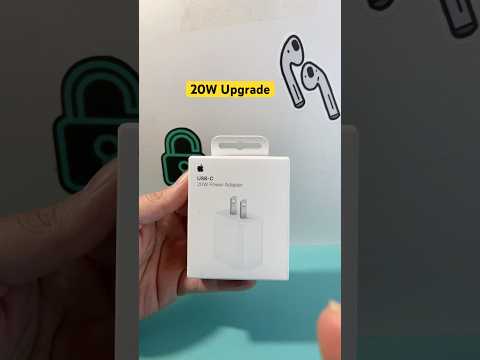
The transition to USB-C is more than a physical port change; it is an integration into a smarter power negotiation protocol. This 20W unit utilizes Power Delivery 3.0, allowing the device and the adapter to communicate in real-time. For developers and AI enthusiasts, this communication is vital. It ensures that while the device is executing heavy background tasks—such as LLM inference or large-scale photo indexing—the thermal envelope remains controlled, preventing the software from throttling the CPU/GPU clock speeds.
Thermal Management and AI Performance Stability
One of the primary challenges in mobile AI automation is heat generation. High-wattage chargers (60W+) can lead to rapid thermal saturation, which triggers the OS to decrease the efficiency of the NPU (Neural Processing Unit). The 20W USB-C adapter provides a sustained, moderate current that optimizes the charging curve. By maintaining a lower temperature, the device can continue running automated Shortcuts, background data synchronization, and AI-driven battery optimization scripts without interruption.
From a software perspective, the integration of AI in modern operating systems monitors these charging cycles to predict user behavior. Through Machine Learning-based Optimized Battery Charging, the system learns your routine, delaying the final 20% of the charge until necessary. This specific 20W brick serves as the ideal hardware partner for this software logic, providing enough headroom for fast charging to 50% while allowing the AI to manage the remaining capacity to preserve long-term battery chemistry.
AI Implementation Score: Power & Hardware Synergy
To quantify how this hardware integrates with an AI-first workflow, we have developed the AI Implementation Score based on efficiency, automation compatibility, and thermal stability.
| Category | Score (1-10) | Technical Reasoning |
|---|---|---|
| Hardware Integration | 9.2 | Native PD 3.0 support allows for seamless OS-level power negotiation. |
| Thermal Stability for AI | 8.5 | Minimizes NPU throttling during high-compute local AI tasks. |
| Automation Potential | 7.8 | Reliable trigger for "Plugged In" automation states in iOS/Android. |
| Energy Efficiency | 9.5 | Optimized for minimal standby power draw (Vampire Power). |
Standardizing the Smart Workflow

For users looking to automate their digital lives, the 20W USB-C Power Adapter is the "Golden Ratio" of charging. It supports fast charging (0 to 50% in approximately 30 minutes) which is essential for mobile professionals, while remaining small enough for minimalist deployments. When paired with high-quality USB-C to Lightning or USB-C to USB-C cables, the adapter ensures that the data integrity of the power handshake is never compromised, allowing the device's internal AI to accurately report battery health metrics and cycle counts.
Strong hardware enables strong software. By choosing a standardized 20W PD solution, you are ensuring that your device’s AI capabilities remain unhindered by thermal constraints or erratic power delivery, effectively future-proofing your mobile automation stack.
