
Welcome to Smart AI Fix, your premier authority for mastering the intricacies of Apple technology and enhancing your digital productivity. In today's fast-paced digital world, the ability to efficiently manage and share documents is paramount. While images are fantastic for capturing moments and information, they often lack the universal compatibility and professional presentation that the Portable Document Format (PDF) offers. Whether you’re digitizing important receipts, compiling project notes, or preparing a presentation from visual assets, converting images to PDF directly on your device is an invaluable skill.
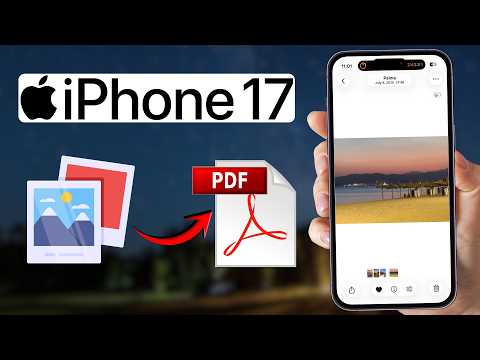
This comprehensive guide is meticulously crafted to empower users of the cutting-edge iPhone 17 and iPhone 17 Pro. We will delve into the simplest and most effective methods to transform your captured images into professional PDF documents, all without the need for third-party applications. Understanding this process not only streamlines your workflow but also ensures your documents are consistently presented with clarity and integrity. At Smart AI Fix, we believe in equipping you with the knowledge to fully leverage the advanced capabilities of your Apple devices, transforming complex tasks into intuitive actions.
Prerequisites for Seamless Image-to-PDF Conversion
Before you embark on the journey of converting your images into PDF documents on your iPhone 17 or iPhone 17 Pro, it’s essential to ensure you have everything in place for a smooth and uninterrupted experience. Preparation is key to avoiding any potential hurdles and maximizing your efficiency. Here’s a detailed list of what you’ll need:
- An iPhone 17 or iPhone 17 Pro: This guide is specifically tailored for these advanced Apple devices, leveraging their built-in iOS features. Ensure your device is readily available and charged.
- iOS Operating System: Your iPhone 17/17 Pro should be running the latest version of iOS available for these models. Apple frequently updates its operating system, introducing new functionalities and refining existing ones. Keeping your iOS up to date ensures you have access to the most current and optimized PDF conversion tools.
- Images Ready for Conversion: The images you intend to convert must be saved and accessible within your iPhone's 'Photos' application or 'Files' application. These can be photos you’ve taken, screenshots, or images transferred from other sources. Ensure they are organized and easy to locate.
- Sufficient Battery Life: While the conversion process is generally quick, having ample battery life prevents any interruption during crucial steps, especially if you plan to convert a large batch of images or share the resulting PDF immediately.
- Adequate Storage Space: PDF files, especially those created from high-resolution images, can occupy a significant amount of storage. Verify that your iPhone 17/17 Pro has enough free space to accommodate the new PDF document. You can check your storage in 'Settings' > 'General' > 'iPhone Storage'.
- Basic Familiarity with iOS Navigation: An understanding of how to navigate the Photos and Files apps, select multiple items, and utilize the Share Sheet will be beneficial. This guide assumes a fundamental grasp of the iPhone's user interface.
- Optional: Internet Connection (for Cloud Storage/Sharing): If your intention is to save the created PDF to a cloud service (like iCloud Drive, Google Drive, or Dropbox) or share it via email or messaging apps, a stable internet connection (Wi-Fi or cellular data) will be required. For local saving to your device, an internet connection is not necessary.
- Optional: Target Folder within 'Files' App: If you prefer to save your PDF to a specific, organized location, consider creating a designated folder within the 'Files' app beforehand. This simplifies the saving process and improves document management.
Detailed Step-by-Step Guide: Converting Images to PDF on iPhone 17/17 Pro
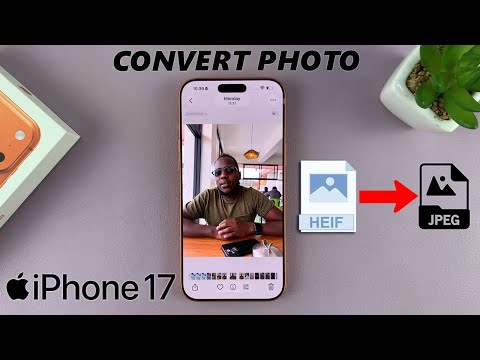
This section will walk you through the primary and most straightforward method to convert images into a PDF document using the native functionalities of your iPhone 17 or iPhone 17 Pro. This technique leverages the built-in 'Print' feature within iOS to create a digital PDF file, completely bypassing the need for third-party applications.
Step 1: Open the Photos Application and Select Your Images
Begin by locating and tapping on the 'Photos' application icon on your iPhone 17 or iPhone 17 Pro's Home Screen. This application, represented by a colorful pinwheel, is where all your captured memories and visual documents reside. Once inside, navigate to the specific album or the 'Recents' tab where your target images are stored. To initiate the selection process, look for the 'Select' button, typically situated in the top-right corner of the screen, and tap it. A series of empty circles will appear on each image. Carefully tap on each photograph or screenshot you wish to include in your final PDF document. As you select an image, a blue checkmark will appear within its circle, indicating it has been chosen. It's important to note that the order in which you select the images will generally dictate their sequence within the resulting PDF file. Take a moment to ensure all desired images are selected in your preferred arrangement.
Step 2: Access the iOS Share Sheet
With all your intended images now selected, direct your attention to the bottom-left corner of your iPhone 17/17 Pro's screen. Here, you will find the 'Share' icon, universally represented by a square with an arrow pointing upwards. Tapping this icon will bring up the iOS Share Sheet, a versatile menu that presents a wide array of options for sharing, saving, or performing actions on your selected content. Scroll through the available options to familiarize yourself with the choices, preparing for the next crucial step.
Step 3: Initiate the Print Function
Within the Share Sheet, you will need to scroll down through the various application and action icons until you locate the 'Print' option. This option is usually found under the 'Actions' section. Tap on 'Print'. This action will transition you to the 'Printer Options' screen. On this screen, you’ll see a print preview area displaying small thumbnail versions of the images you selected. Below the preview, you might see options for selecting a printer, but for our purpose, we will not be connecting to a physical printer.
Step 4: Transform Images to PDF via Print Preview
This is the most critical and ingenious step in converting your images to a PDF on your iPhone 17/17 Pro. On the 'Printer Options' screen, where you see the small thumbnails of your selected images, perform a "pinch-out" gesture on one of the image thumbnails in the print preview area. Imagine you are zooming in on a single image, but instead of just zooming, you are expanding the entire preview. Alternatively, for some iOS versions and devices, a firm long-press on one of the preview thumbnails will achieve the same effect. Upon successfully performing this gesture, the print preview will expand into a full-screen, standalone PDF document. This seamless transformation occurs entirely within your iPhone's operating system, demonstrating the robust capabilities of your Apple device to instantly "print" your selected images into a digital PDF format.
Step 5: Access the PDF Share Options
Once your images have been successfully converted and are now displayed as a full-screen PDF preview, you will notice a slight change in the user interface. The 'Share' icon (the square with the upward arrow) will reappear, this time typically located in the top-right corner of the full-screen PDF preview. It is crucial to tap this 'Share' icon again. This second Share Sheet is distinct from the one you accessed in the Photos app; it is specifically tailored for sharing and saving your newly generated PDF document.
Step 6: Save or Share Your Newly Created PDF
From this PDF-specific Share Sheet, you are now presented with a comprehensive set of options for managing your new PDF document. Your choices include:
- Save to Files: This is often the most common and recommended choice for archiving your PDF. Tap 'Save to Files', and a new interface will appear, allowing you to choose a destination folder. You can save it 'On My iPhone' (for local access), to 'iCloud Drive' (for cloud backup and synchronization across your Apple devices), or to any other connected cloud services such as Google Drive or Dropbox. Before saving, you will be prompted to provide a descriptive name for your PDF file. Enter a name that accurately reflects the content (e.g., "Monthly Receipts October 2024" or "Project Phoenix Visuals"). After naming, tap 'Save' in the top-right corner to finalize the storage of your PDF.
- Email: If you need to send the PDF via email, select your preferred email client (e.g., Apple Mail, Gmail). The PDF will be automatically attached to a new email draft, ready for you to address and send.
- Messaging Applications: For quick sharing with contacts, you can select messaging apps such as iMessage, WhatsApp, or other compatible communication services installed on your iPhone 17/17 Pro.
- Other Applications: Depending on the apps you have installed, you may see options to open the PDF directly in applications that support PDF viewing or editing, such as Books, Adobe Acrobat Reader, or various note-taking apps.
Select the option that best suits your needs to complete the conversion and distribution of your image-based PDF document. Congratulations, you have successfully converted images to a professional PDF on your iPhone 17 or iPhone 17 Pro!
Key Features & Comparison: Image-to-PDF Methods on iPhone 17/17 Pro

While the native Photos app "Print to PDF" method is highly effective, it's beneficial to understand other ways your iPhone 17/17 Pro can handle document and image conversion. This comparison highlights the strengths and weaknesses of different approaches.
| Feature / Method | Native iOS Photos App (Print to PDF) | Native iOS Notes App (Scan Documents) | Third-Party PDF Apps (e.g., Adobe Acrobat Reader) |
| Primary Use Case | Converting existing digital images (photos, screenshots) from your photo library into a single, cohesive PDF document. | Digitizing physical documents or papers into multi-page PDFs using the camera. | Advanced PDF creation, editing, annotation, signing, and comprehensive management of PDF documents. |
| Ease of Use | Very high. Integrated seamlessly into the Photos app's sharing functionality, requiring minimal steps. | High. Straightforward for scanning, with intuitive guidance for capturing documents. | Varies. Basic functions are often simple, but advanced features can have a steeper learning curve. |
| Multi-Item Support | Yes. Easily select and combine multiple images into a single PDF. Order is determined by selection. | Yes. Combine multiple scanned pages into one continuous PDF document. | Yes. Most offer robust multi-image/document import and combination features. |
| OCR (Text Recognition) | No native Optical Character Recognition for existing digital images in this conversion method. | Yes. Built-in OCR for scanned documents, making the text within the PDF searchable and selectable. | Often includes advanced OCR capabilities, sometimes with multi-language support and better accuracy. |
| File Editing/Annotation | Limited. Images can be edited in the Photos app *before* conversion. No PDF editing post-creation. | Limited annotation tools (markup) available during or immediately after the scanning process. | Extensive tools: highlight, annotate, merge, split, reorder pages, fill forms, sign documents, add comments. |
| Privacy & Security | High. The entire conversion process occurs locally on your iPhone 17/17 Pro, with no data leaving your device unless you explicitly share it. | High. Scanning and conversion are processed entirely on your device, ensuring data privacy. | Varies by app developer. Some apps require cloud storage or account creation, which may involve data sharing. Always review privacy policies. |
| Cost | Free. This functionality is built into the iOS operating system of your iPhone 17/17 Pro. | Free. This functionality is built into the iOS operating system. | Many offer free basic versions, with premium features or advanced editing capabilities often requiring subscription fees. |
| Pros | Quick, simple, no additional apps needed. Excellent for creating visual compilations or archives from photos. | Ideal for digitizing physical papers, contracts, or whiteboards with good quality scans and searchable text. | Provides powerful, professional-grade tools for comprehensive PDF management and workflow integration. |
| Cons | No editing or reordering of pages after PDF creation. Lacks OCR for images. Limited customization. | Primarily designed for scanning physical documents, less direct for existing digital images. Limited editing compared to dedicated PDF editors. | Can be expensive for full features. Some apps may introduce feature bloat or have privacy implications depending on their data handling practices. |
Pro Tips & Optimization for iPhone 17/17 Pro PDF Creation

Beyond the basic steps, Smart AI Fix offers these expert insights and optimization strategies to elevate your image-to-PDF conversion experience on your iPhone 17 and iPhone 17 Pro, ensuring efficiency, quality, and security.
- Optimize Image Quality vs. File Size:
Before converting images, consider their resolution and file size. High-resolution images (especially from the advanced camera system of the iPhone 17/17 Pro) will result in larger PDF files. While iOS does a good job of optimizing, if you're creating a PDF for email or web sharing where file size is critical, you might consider lightly compressing or resizing your images using the Photos app's editing tools before conversion. For archival purposes, retaining maximum quality is usually preferred.
- Master Batch Conversion and Ordering:
Remember that the native "Print to PDF" method allows you to select multiple images. Pay close attention to the order in which you tap them during selection in the Photos app. This sequence directly dictates the page order in your final PDF. If you realize an incorrect order after selection, simply deselect all and re-select them in the desired sequence.
- Leverage the Files App for Organization:
After creating your PDF, always save it to a logical location within the 'Files' app. Create dedicated folders for different types of documents (e.g., "Work Documents," "Personal Receipts," "Project Alpha Visuals"). This practice is crucial for long-term document management and quick retrieval, utilizing the robust file system of your iPhone 17/17 Pro.
- Descriptive Naming Conventions:
When prompted to name your PDF, avoid generic titles like "Document1." Instead, use clear, descriptive names that include relevant keywords and dates, such as "Q4 Sales Report Photos 2024-12-15" or "Repair Invoice iPhone 17 2024-11-20." This makes searching for specific PDFs much easier later on.
- Security Considerations for Sensitive Information:
If your images contain sensitive personal or confidential information, exercise caution when sharing the resulting PDF. While native iOS doesn't offer password protection for PDFs created this way, if you plan to share it electronically, ensure you are sending it to trusted recipients via secure channels. For highly sensitive documents, consider using a third-party PDF app that offers password encryption features.
- Cloud Integration for Backup and Accessibility:
Utilize the 'Files' app's integration with cloud services like iCloud Drive, Google Drive, or OneDrive. Saving your PDFs to a cloud service provides an automatic backup, protects against device loss, and allows you to access your documents from any of your other connected devices (iPad, Mac, PC). This is a cornerstone of modern digital workflow on your iPhone 17/17 Pro.
- Troubleshooting Common Issues:
- "Print" Option Missing: If the 'Print' option doesn't appear in the Share Sheet, try restarting the Photos app (swipe up from the bottom of the screen to enter the App Switcher, then swipe the Photos app card upwards to close it, then reopen). If it persists, restart your iPhone 17/17 Pro. Ensure your iOS is updated.
- Pinch Gesture Not Working: If the pinch-out gesture on the print preview doesn't trigger the PDF creation, try a firm long-press on one of the image thumbnails instead. Ensure your fingers are directly on the preview and not outside the bounds.
- Large File Size Issues: If your PDF is excessively large and causes issues with sharing, review the original image resolutions. Consider converting smaller batches or optimizing image quality before the conversion process.
- Use Markup Before PDF Creation:
If you need to highlight, circle, or add text to an image *before* it becomes part of the PDF, use the 'Markup' tool available in the Photos app's editing interface. Edit the image, save the changes, then proceed with the PDF conversion steps. This allows for basic annotation within the image before it’s permanently embedded in the PDF.
Frequently Asked Questions (FAQ) About Image to PDF on iPhone 17/17 Pro
Q1: Can I reorder the images in the PDF after creation on my iPhone 17/17 Pro?
A: Unfortunately, using the native "Print to PDF" method in the Photos application on your iPhone 17 or iPhone 17 Pro does not allow for reordering of images once the PDF has been created. The images are embedded into the PDF in the exact sequence you selected them initially. If you need a specific order, it is crucial to ensure you tap on the images in that desired sequence during Step 1 of the conversion process. If you find the order is incorrect after creation, your best option is to either restart the selection process in the Photos app, carefully choosing the images in the new desired order, or utilize a third-party PDF editing application available on the App Store that offers page reordering functionalities. Such applications often come with additional tools for more advanced PDF manipulation.
Q2: Does converting images to PDF on my iPhone 17/17 Pro reduce their quality?
A: Generally, the native iOS conversion process on your iPhone 17 or iPhone 17 Pro is designed to maintain a high level of image quality. Apple’s built-in PDF engine aims for a balance between file size and visual fidelity, so for most practical uses, any reduction in quality is minimal and often imperceptible to the human eye. However, it's important to understand that some level of compression is inherent in PDF creation, especially when combining multiple high-resolution images. If you start with extremely high-resolution photos, the resulting PDF might have a slightly reduced file size, implying some degree of data optimization. For critical applications where absolutely no quality loss can be tolerated, or for professional print work, it might be advisable to use specialized desktop software. For everyday sharing and archiving on your Apple device, the quality produced by your iPhone 17/17 Pro will be more than sufficient.
Q3: Is there a limit to how many images I can convert into a single PDF on my iPhone 17/17 Pro?
A: While the iOS operating system on your iPhone 17 or iPhone 17 Pro doesn't impose a strict, hard-coded numerical limit on the number of images you can combine into a single PDF, practical limitations do exist. These are primarily dictated by your device's available storage space, its processing power, and the overall RAM (Random Access Memory) allocated to the task. Converting a very large number of high-resolution images can result in an extremely large PDF file, which might take longer to process, potentially strain system resources, and could lead to slower performance or even an app crash if the device runs out of memory. For best performance and reliability, especially when dealing with hundreds of images or files with extremely large dimensions, Smart AI Fix recommends converting images in smaller batches. If you frequently need to combine an exceptionally high volume of visual assets, consider transferring them to a Mac or PC for processing with dedicated desktop PDF software, which typically offers greater resources.
Conclusion

Mastering the ability to convert images to PDF on your iPhone 17 or iPhone 17 Pro is more than just a technical trick; it's a fundamental skill that significantly enhances your productivity and document management on your Apple device. From preserving important visual information to streamlining your sharing processes, the native capabilities of iOS provide a robust and intuitive solution.
At Smart AI Fix, we are dedicated to providing you with the most accurate, comprehensive, and actionable guidance to unlock the full potential of your technology. By following this ultimate guide, you are now equipped to effortlessly transform your images into professional PDF documents, maintaining both utility and elegance inherent in your iPhone 17/17 Pro. Continue to explore, innovate, and optimize your digital life with Smart AI Fix as your trusted guide.
