
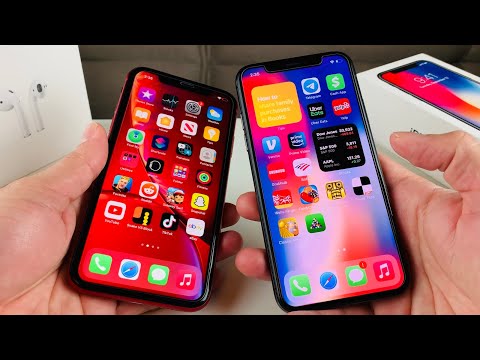
In the landscape of legacy hardware, the choice between the iPhone X and the iPhone XR often boils down to a conflict between premium build quality and modern processing efficiency. For users prioritizing AI-driven automation and long-term software stability, the architectural differences between the A11 Bionic and the A12 Bionic chips are more significant than the exterior aesthetics might suggest.
Processing Power and AI Efficiency
The iPhone XR is powered by the A12 Bionic chip, which marked a massive leap in machine learning capabilities. Unlike the A11 Bionic in the iPhone X, the A12 features an 8-core Neural Engine capable of performing 5 trillion operations per second. For users running AI-heavy applications, real-time translation, or complex automation workflows via Siri Shortcuts, the iPhone XR offers a noticeably smoother experience and better thermal management under sustained load.
Conversely, the iPhone X remains a powerhouse for standard tasks, but its first-generation Neural Engine is less efficient at processing modern Core ML models. While the iPhone X provides a premium feel with its stainless steel frame, its silicon architecture is the primary bottleneck for future-proofing in an increasingly AI-centric ecosystem.
Display Technology vs. Battery Longevity

One of the most polarizing differences is the display technology. The iPhone X features a high-resolution Super Retina OLED panel, offering superior contrast ratios and true blacks. From a technical perspective, OLED is more power-efficient when using "Dark Mode" automation, as individual pixels are powered down completely.
However, the iPhone XR utilizes a Liquid Retina LCD. While it lacks the pixel density of the X, the lower resolution requires less GPU overhead, which, combined with the efficiency of the A12 chip, results in significantly better battery life. For professionals who rely on their devices for all-day field work or automated data syncing without frequent charging stops, the XR is the more reliable tool.
Camera Systems and Computational Photography

The iPhone X utilizes a dual-camera system with a dedicated telephoto lens, allowing for hardware-based optical zoom. The iPhone XR relies on a single wide-angle lens but compensates through computational photography. Thanks to the enhanced ISP (Image Signal Processor) in the A12 chip, the XR supports Smart HDR and sophisticated depth control via software, often producing better dynamic range in complex lighting than the older iPhone X hardware.
AI Implementation Score
To better understand how these devices handle modern software demands, we have graded them based on AI performance metrics:
| Metric | iPhone X (A11) | iPhone XR (A12) |
|---|---|---|
| Neural Engine Speed | 600 Billion ops/s | 5 Trillion ops/s |
| On-Device ML Efficiency | Moderate | High |
| Software Lifecycle | Legacy Status | Extended Support |
| Power-to-AI Ratio | 7/10 | 9/10 |
Final Technical Verdict

For the enthusiast of smart automation and software longevity, the iPhone XR is the superior option. Its A12 Bionic chip ensures that it remains compatible with newer iOS features and AI frameworks for a longer duration. While the iPhone X offers a superior OLED display and a more compact, premium chassis, it is functionally outpaced by the XR's superior efficiency and machine learning throughput.
If your priority is aesthetic and display precision, choose the X. If your priority is computational performance and battery reliability, the XR is the logical technical investment.
