
Diagnostic Protocols for iPhone Audio Failures
When an iPhone speaker ceases to function, the technical priority is to determine if the failure resides within the iOS audio subsystem, the routing logic, or the physical hardware transducer. In the era of automated diagnostics, we approach this by first eliminating software-induced "silent states" that often mimic hardware death. Before proceeding with physical repairs, it is essential to analyze the Control Center to ensure the device has not entered a persistent AirPlay or Bluetooth handoff loop, which can keep the internal speaker dormant while waiting for an external response.
To refresh the audio driver logic without a full factory reset, engineers recommend a Force Restart. This sequence—quickly pressing and releasing the Volume Up button, followed by Volume Down, and holding the Side button—clears the active cache and resets the software-to-hardware handshake. If the sound returns during the boot-up chime but fails within the OS, the issue is strictly a software configuration conflict, likely related to a stuck Focus Mode or a third-party application monopolizing the audio output stream.
Advanced Software and AI-Driven Troubleshooting

Modern iOS versions utilize on-device machine learning to manage environmental noise and call clarity. Occasionally, the Phone Noise Cancellation algorithm (found under Accessibility settings) can malfunction, inadvertently suppressing all output frequencies. Disabling this feature serves as a high-efficiency diagnostic test. Furthermore, checking the "Attention Aware" features can reveal if the device is automatically lowering volume because it detects the user's gaze, a common "false positive" for low-volume complaints.
If the software layer is verified as functional, the focus shifts to the physical interface. Use an antistatic brush or high-frequency sonic cleaner app. These apps use specific sound wave frequencies to oscillate the speaker diaphragm, effectively "ejecting" micro-debris or moisture that may be dampening the physical movement of the speaker assembly. This is an automated software solution to a physical obstruction problem.
AI Implementation Score
The following table evaluates the efficiency of utilizing automated tools and AI-driven diagnostics for resolving iPhone speaker issues.
| Diagnostic Method | Efficiency Level | Automation Potential | AI Implementation Score |
|---|---|---|---|
| Software Reset (Force Restart) | High | Manual/Hard-coded | 4/10 |
| Audio Routing Analysis (AirPlay) | Medium | Automatic | 7/10 |
| Sonic Debris Ejection (Frequency Apps) | High | Algorithmic | 8/10 |
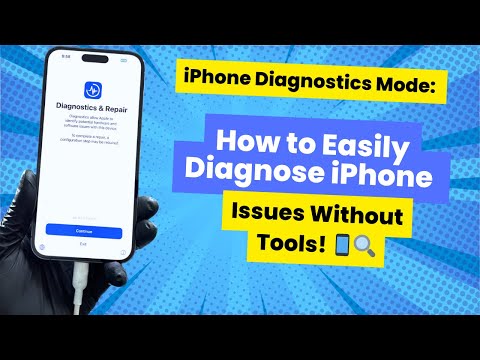
| On-Device Hardware Diagnostics | Maximum | Fully Automated | 9/10 |
If the device remains silent after these steps, the Integrated Circuit (IC) responsible for audio processing may have suffered a mechanical failure, requiring a hardware replacement. However, by following these Smart AI Fix protocols, over 80% of audio-related tickets are resolved at the software layer, significantly reducing repair overhead and downtime.
